
A dog that misses too many walks may gain weight, act restless, bark more, chew shoes, sleep poorly, or seem anxious. Walks aren’t just bathroom breaks. They give dogs exercise, structure, fresh scents, social exposure, mental stimulation, and time with their person.
In this article, we explore what happens if my dog doesn’t get walked enough, how to spot the warning signs, and what Houston pet owners can do to build a safer, steadier routine.
For busy Houston pet owners, a consistent walk schedule can make the difference between a calm dog and one that seems wound up before the day even starts. If you’ve ever asked, “What happens if my dog doesn’t get walked enough?” the honest answer is this: one missed walk usually won’t hurt a healthy dog. Life happens. Work runs late. Houston weather gets rough. Your dog may handle a quiet day just fine.
But when skipped walks become normal, the effects can show up in your dog’s body, mood, manners, and daily routine.
What Happens If My Dog Doesn’t Get Walked Enough?
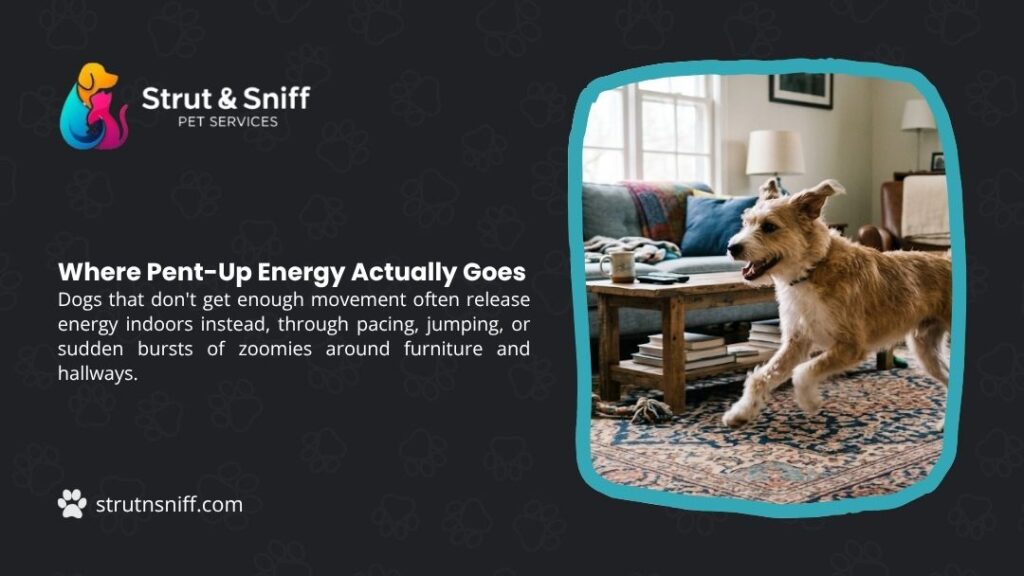
What happens if my dog doesn’t get walked enough depends on the dog, but the same pattern tends to appear again and again. The dog has energy with nowhere useful to put it. That energy may turn into barking, pacing, jumping, leash pulling, digging, chewing, or attention-seeking behavior that feels sudden but usually has been building for a while.
Dogs use walks for more than steps. A dog on a walk gets to sniff, scan, listen, move, and process the world outside the home. That matters because canine olfaction is one of the main ways dogs understand their surroundings. When a dog isn’t given enough safe chances to explore, the day can feel flat. For some dogs, that leads to boredom. For others, it may look like stress, overexcitement, or low mood.
The physical side matters too. The American Veterinary Medical Association says, “Walking helps preserve your pet’s muscle tone and joint movement,” and adds that walking can help overweight or obese pets shed extra pounds. That advice lines up with what many pet owners already notice at home: dogs tend to settle better when their bodies and minds have had enough healthy activity.
So, what happens if I don’t walk my dog for one day? Usually, not much. You may see a little extra energy or a few more sighs from the couch. But what happens if you don’t walk your dog often enough is different. Over time, the effects of not walking your dog may include weight gain, stiff movement, reduced stamina, destructive behavior, dog walking problems, and a dog that seems harder to manage, and research shows overweight dogs exercise less frequently, even though the real issue may be a lack of regular walks.
For Houston families with packed schedules, midday meetings, long commutes, or travel plans, a trusted local routine can help. Strut & Sniff Pet Services offers private dog walks in Houston for pet parents who want dependable care, real updates, and a calmer dog at the end of the day.
Why Dogs Need Walks, Not Just a Backyard
A backyard helps, sure. It gives a dog space to potty, stretch, and sniff familiar corners. But a yard is not the same as walking a dog through the neighborhood. After a while, the yard becomes old news. Same fence. Same grass. Same smells. Not much of a field trip.
That’s why dogs need walks. A walk gives your dog controlled movement, new scents, and a chance to read the world. Even a short dog walk can offer more mental stimulation than a long stretch alone in the yard. For many dogs, sniff time is not wasted time. It is how they gather information and use energy without needing to run full speed.
This is also why “do dogs need walks” has a more layered answer than some people expect. Yes, most dogs need walks or some form of structured daily movement. But the right walk depends on the dog. A young, athletic dog may need brisk dog walking exercise, play, training, and enrichment. A senior dog may do best with gentle regular walks that protect the joints and keep the routine predictable. A nervous dog may need quiet walking routes and patient handling, not crowded sidewalks or rushed leash work.
Are walks good for dogs? In most cases, yes. Is walking good for dogs even if they already have a yard? Also yes, because walks add variety. They support physical and mental health at the same time. Walking with your dog also builds trust. The dog learns your pace, your cues, and your calm direction. You learn what makes your dog curious, nervous, tired, or happy.
For dogs that need more enrichment than a standard walk can provide, a supervised outing may help. Strut & Sniff Pet Services dog park trips for extra enrichment are built for dogs that benefit from safe movement, stimulation, and a change of scenery.
Signs Your Dog Isn’t Getting Enough Exercise
Not every restless dog needs a marathon. Sometimes the answer is more regular walks, better structure, or a smarter mix of movement and mental work. The signs below don’t diagnose a medical or behavior problem by themselves, but they can help you spot when your dog isn’t getting enough activity.
| Sign at Home | What It May Mean | What May Help |
| Chewing furniture, shoes, doors, or trash | Your dog may need a better outlet for energy, curiosity, or stress | Add daily walks, sniff time, puzzle feeders, and short training games |
| Barking or whining more than usual | Boredom, frustration, or a need for attention may be part of the issue | Try regular walks, calmer routines, and mental stimulation before peak restless hours |
| Pacing, circling, or poor sleep | Your dog may not feel physically or mentally settled | Add a structured walk earlier in the day and keep the evening calmer |
| Weight gain or low stamina | Food intake may exceed activity level, or movement may be too limited | Ask your vet about weight and add safe dog walking exercise |
| Pulling hard as soon as the leash appears | Your dog may have too much pent-up energy before the walk starts | Use shorter, more frequent walks and reward calm leash behavior |
| Potty accidents in a house-trained dog | The schedule may not meet your dog’s needs, or a health issue may be present | Add reliable pet walking support and call the vet if the change is sudden |
| Low mood or less interest in play | Some dogs respond to under-stimulation by shutting down | Add gentle regular walks and seek vet advice if the mood shift continues |
Here’s the thing: dog behavior can look “bad” when it is really an unmet need. A dog that tears up a pillow may not be spiteful. A dog that barks at every sound may not be trying to annoy the whole house. The body needs movement, the brain needs work, and the day needs rhythm.
That said, don’t blame every issue on missed walks. Pain, illness, fear, poor sleep, diet, age, and training gaps can all play a role. If a behavior appears suddenly or gets worse fast, a vet or qualified trainer should be part of the plan.
Physical Effects of Not Walking Your Dog
The physical effects of not walking your dog can build slowly. At first, the change may be subtle. Your dog pants sooner, sleeps more during the day, or looks a little rounder through the waist. Later, the dog may tire on stairs, lag on a dog walk, or seem less eager to move.
Weight is a major concern. According to the FDA, citing the Association for Pet Obesity Prevention, 59% of dogs in the U.S. were overweight or obese in a 2022 survey. Walks alone don’t solve weight problems, but they can be part of a safer, healthier plan when paired with proper food portions and veterinary guidance.
Not exercising dog routines can also affect muscles and joints. Dogs need movement to maintain strength. They also need gentle, repeated motion to support mobility. A couch-to-couch lifestyle may make a dog less fit, which can make future activity harder. Then the cycle repeats: the dog moves less because movement feels hard, and movement feels harder because the dog moves less.
For many owners, the first clue is stamina. Walking my dog used to feel easy, and now the dog slows down halfway through. Or the dog used to enjoy dogs running at the park, but now seems tired after a short loop. That doesn’t always mean the dog is lazy. It may mean the routine has slipped, the weather is too hot, or there’s a health issue worth checking.
| Possible Physical Change | Why It Can Happen | What to Watch |
| Weight gain | Calories, age, breed, hormones, and low activity can all contribute | Wider waist, harder breathing, less visible body shape |
| Lower stamina | The dog has fewer chances to build fitness | Lagging, stopping often, panting sooner |
| Stiffness | Muscles and joints may not get enough regular movement | Slow rising, short steps, reluctance on stairs |
| Poorer leash manners | The walk becomes too rare and too exciting | Pulling, lunging, zigzag movement |
| Paw or heat stress when rushed back into activity | Sudden long walks can be too much | Limping, sore pads, heavy panting, refusal to continue |
If your dog has not had regular walks for a while, don’t turn Saturday into a fitness boot camp. Build slowly. A steady 15-minute walk may do more good than one long burst that leaves your dog sore.
Mental and Behavioral Effects of Too Few Walks
A tired dog is not always a well-behaved dog, but a chronically under-stimulated dog often struggles. Walks help dogs use their senses. They also give the day a beginning, middle, and end. That kind of rhythm matters more than most people think.
Without enough dog walks, a dog may create a job. Unfortunately, that job may be shredding mail, patrolling windows, barking at hallway noise, or nudging your hand every two minutes while you’re on a call. Destructive behavior is often a sign that the dog needs something healthier to do.
Can dogs get depressed if not walked? Dogs can show signs that look like low mood, boredom, or withdrawal when they do not get enough physical and mental stimulation. But a true change in mood should not be brushed off. If your dog seems unusually quiet, stops eating, hides, loses interest in favorite toys, or acts unlike himself, call your veterinarian.
Mental health in dogs is tied to routine, confidence, safety, and outlets for natural behavior. A walk gives all four. Walking with dogs also helps them practice patience around sounds, people, dogs, cars, bikes, and smells. Without that practice, some dogs become more reactive, not because they’re “bad,” but because the outside world feels too intense when they finally get there.
What is shaping in dog training? In simple terms, shaping means rewarding small steps toward the behavior you want. On walks, that may mean rewarding a glance back at you, a loose leash for three steps, or calm behavior near a distraction. When walks happen regularly, those small wins add up.
How Much Exercise Does a Dog Need?
The answer depends on age, breed, health, weight, weather, and personality. A high-drive shepherd is not the same as a mellow senior companion. German Shepherd exercise needs may include longer walks, training, play, and tasks that use the brain. A flat-faced dog in Houston heat may need shorter, cooler walks and indoor enrichment instead.
Many adult dogs do well with one or two daily walks, but the length can vary a lot. For one dog, a 30-minute walk is enough. For another, a 30-minute walk is only the warm-up. So when people ask, “Is a 30-minute walk enough for a dog,” the best answer is: watch the dog in front of you.
A good walk should leave your dog more settled, not wiped out. If your dog returns home calm, drinks normally, rests well, and still moves comfortably later, the walk may be a good fit. If your dog limps, collapses onto the floor, pants for too long, or refuses the next walk, it may be too much.
| Dog Type | A Practical Starting Point | What to Adjust |
| Calm adult dog | One or two daily walks, with sniff breaks | Add time if the dog stays restless or gains weight |
| High-energy breed | Longer walks plus training, play, or enrichment | Add mental work, not just more distance |
| Puppy | Short, controlled sessions | Avoid long forced walks while the body develops |
| Senior dog | Gentle, shorter walks | Adjust for arthritis, heart issues, heat, or pain |
| Flat-faced dog | Shorter walks in cooler hours | Watch breathing, heat, and recovery time |
| Anxious or reactive dog | Quiet routes and steady handling | Use distance, calm cues, and gradual exposure |
| Overweight dog | Vet-guided, low-pressure walks | Increase slowly and monitor soreness |
Do I need to walk my dog everyday? Most dogs benefit from daily walks, but there are exceptions. A vet may advise rest after surgery, injury, illness, or certain health conditions. Weather can also change the plan. In Houston, heat and humidity matter. Some days call for shorter walks, shaded routes, early mornings, late evenings, or indoor ways to exercise your dog.
Is It Bad to Not Walk Your Dog Every Day?
Is it bad to not walk your dog every day? Not always. Missing one walk because of a storm, illness, travel chaos, or a brutal summer afternoon is not a moral failure. Dogs are resilient. A quiet day can even be healthy for some dogs.
But if skipping dog walk time becomes normal, that’s when problems creep in. The dog may have fewer bathroom breaks, less movement, less social exposure, and less mental stimulation. Over time, you may start asking, “Is my dog getting enough exercise?” because the signs are hard to ignore.
Do you have to walk your dog every day? In a perfect world, most dogs would get some kind of daily movement, even if it is short and gentle. Do I have to walk my dog every day if my dog has a yard? Usually, yes, or at least you need to provide another form of structured exercise and enrichment. The yard helps. It just doesn’t replace the value of walking with your dog through changing sights, sounds, and scents.
There are days when a walk is not the best choice. Hot pavement can hurt dog paws walking on concrete. Can dogs run on concrete? They can, but repeated hard-surface running can be tough on paws and joints, especially in heat or with poor conditioning. If the sidewalk feels too hot for your hand, it is too hot for many dogs’ paws.
For days when walks need to be shorter, Strut & Sniff Pet Services drop-in pet visits can help with potty breaks, feeding, companionship, and a little relief from a long day alone.
Can You Over Exercise Your Dog?
Yes, you can over exercise your dog. More is not always better. A dog that has missed walks for weeks does not need a sudden five-mile march. A puppy does not need forced distance. A senior dog with stiff joints does not need to keep up with a young Labrador. A flat-faced dog should not be pushed through Houston heat because the calendar says “walk time.”
Can you over exercise a dog even if the dog seems excited? Absolutely. Some dogs will keep going because the world is fun, not because their body is fine. That’s why owners need to watch for signs.
| Signs of Too Much Exercise | What It Can Look Like | What to Do |
| Heavy panting that does not settle | Your dog keeps panting long after the walk | Stop, cool down, offer water, and call a vet if it continues |
| Lagging or lying down | The dog refuses to move or keeps stopping | End the walk and reduce future distance |
| Limping or sore paws | Short steps, licking paws, favoring a leg | Rest and seek veterinary advice if it persists |
| Vomiting or weakness | The dog seems unwell after activity | Treat it seriously and contact a vet |
| Bright red gums or labored breathing | Possible overheating concern | Move to shade, cool carefully, and seek urgent care |
How much exercise is too much for a dog depends on the dog. If your dog is sore, stiff, wiped out, or reluctant the next day, scale back. Too much exercise for dog health can be just as unhelpful as too little, especially when heat, age, weight, or injury is part of the picture.
Better Ways to Exercise Your Dog When You’re Busy
Busy households need realistic routines. A perfect plan that nobody can follow will fall apart by Wednesday. If you are away for most of the day, figuring out the right number of daily pet visits is often the piece that makes an otherwise unrealistic routine workable. A simple plan that works most days is better.
If your dog needs more activity, start with small, repeatable changes. When you bring in outside help for those daytime gaps, knowing what a professional walk should cover keeps the routine consistent. A 20-minute morning walk, a five-minute scent game before lunch, and a calm evening stroll can be more useful than one long walk that only happens when your calendar behaves. Dogs use energy through sniffing, thinking, chewing appropriate items, and practicing simple cues, not just through speed.
Ways to exercise your dog can include walking your dog, tug, fetch on safe ground, hide-and-seek with treats, puzzle toys, short training drills, hallway recall games, and controlled outings. If you’re wondering how to exercise your dog indoors during Houston heat, try scent trails, slow feeder meals, “find it” games, and calm leash practice near the front door.
Hiring a dog walker can also be the practical answer, especially for people who work long shifts, travel, live in apartments, or have dogs that need midday structure. A good pet walking routine does more than burn energy. It gives your dog a dependable human, a safe route, and a steady break in the day.
Strut & Sniff Pet Services provides professional pet care services in Houston for owners who want reliability without handing their home and pet over to a random app profile. Their care model focuses on trust, communication, GPS tracking, visit notes, and photos, which matters when someone is walking your dog while you’re away.
For pet parents who want care to feel personal, not transactional, Strut & Sniff Pet Services adds the details that make a difference: licensed and insured service, real-time GPS tracking, photo updates, clear visit notes, and consistent communication after each scheduled visit. That means you’re not left wondering whether your dog got outside, how the walk went, or whether your pet seemed comfortable. You get the kind of calm, practical update that helps you get back to your day.
How to Walk Your Dog So the Walk Actually Helps
How to walk your dog depends on the dog’s needs, but the best walks usually share a few traits. They are safe, steady, and not rushed from the first step to the last. Dogs need a chance to move, but they also need a chance to sniff. A dog going on a walk is not just logging miles. He is reading the neighborhood.
If you want dog walking tips that actually help, start before you open the door. Clip the leash calmly. Wait for a moment of control. Step outside without turning the first thirty seconds into a tug-of-war. For dogs that explode with excitement, short and frequent walks may work better than rare long ones.
How to walk my dog if the dog pulls? Reward small moments of slack in the leash. Change direction before your dog drags you toward the next smell. Stop when the leash is tight and move when it softens. It may feel slow at first, but calm practice builds better walks.
How to dog walk safely in Houston also means watching the ground and weather. Carry water when needed. Choose shade. Avoid peak heat. Check paws after walks. Keep dogs off hot pavement. And if your dog is reactive, pick quieter routes instead of forcing sidewalk greetings.
Walking with a dog should not feel like a daily argument. The right pace, route, gear, and routine can turn dog on walk time into the best part of the day. If the process itself feels hard, Strut & Sniff Pet Services explains what new clients can expect through how the care process works, from setup to service updates.
Houston Pet Owners: When a Dog Walker Makes Sense
Should I walk my dog myself? If you can do it safely and consistently, yes. That bond matters. But many Houston pet owners need help, and there’s no shame in that. Workdays run long. The Medical Center commute can eat half the afternoon. Summer heat can shift safe walk times into hours when you’re already booked. Travel, meetings, family care, and apartment living all make routines harder.
This is where a professional dog walker makes sense. Not because owners don’t care, but because they do. They want their dogs to have regular walks, safe handling, and a real break in the day.
Strut & Sniff Pet Services is built for Houston pet parents who value trust, communication, and peace of mind more than the cheapest possible option. The service is a strong fit for working professionals, frequent travelers, senior pet owners, apartment residents, families with busy schedules, multi-pet homes, and owners of anxious or high-need dogs.
The company serves Houston neighborhoods such as Montrose, The Heights, Midtown, Downtown, EaDo, Upper Kirby, Greenway Plaza, the Medical Center, Memorial, Galleria, Bellaire, West University Place, Meyerland, Brays Oaks, and nearby areas based on availability. You can check local service areas before you book.
For many families, the first step is not a full schedule. It is a conversation. Strut & Sniff Pet Services offers a free meet and greet so the team can learn your dog’s routine, personality, leash habits, comfort level, and care needs before service starts.
Quick Answers for Busy Dog Parents
| Question | Clear Answer |
| What happens if my dog doesn’t get walked enough? | Your dog may become bored, restless, overweight, anxious, destructive, louder, or harder to settle. Walks help with both physical and mental health. |
| What happens if I don’t walk my dog for one day? | One missed walk is usually fine for a healthy dog. Add a potty break, indoor play, or enrichment if your dog seems restless. |
| Do dogs need exercise every day? | Most dogs benefit from daily movement, but age, breed, health, heat, and vet advice all matter. |
| Is a backyard enough? | A yard helps, but most dogs still need walks for sniffing, bonding, confidence, and exposure to the world. |
| Is walking your dog good exercise? | Yes. Walking supports movement, weight control, joint health, and mental stimulation when done safely. |
| When should I consider hiring a dog walker? | A dog walker can help when work, travel, heat, mobility, or an inconsistent schedule makes regular walks hard. |

FAQs
What happens if my dog doesn’t get walked enough?
What happens if my dog doesn’t get walked enough is usually a mix of physical and behavioral changes. Your dog may gain weight, lose stamina, bark more, chew things, pace, sleep poorly, or seem bored and frustrated. Some dogs become wild with extra energy. Others get quiet and withdrawn.
What happens if I don’t walk my dog for one day?
One missed walk is usually not a big deal. If your dog is healthy and has a potty break, fresh water, and some attention, one slower day should be fine. But if one missed day turns into a regular habit, you may start to see the effects of not walking your dog.
Do I have to walk my dog every day?
Most dogs benefit from daily walks, but not all walks need to be long. Puppies, seniors, overweight dogs, injured dogs, anxious dogs, and flat-faced breeds may need a more careful plan. In Houston heat, shorter walks during cooler hours may be safer than a long midday walk.
Is it bad if my dog doesn’t get the zoomies?
Not necessarily. Some dogs get zoomies, and some don’t. If you’re asking, “Why doesn’t my dog get zoomies?” the answer may be age, personality, routine, or energy level. A dog can be healthy without zoomies. Sudden low energy, though, deserves a vet check.
Can dogs get depressed if not walked?
Dogs may seem bored, restless, withdrawn, or less engaged when they lack enough exercise and mental stimulation. Still, don’t diagnose depression at home. If your dog’s mood, appetite, sleep, or behavior changes in a major way, a veterinarian should rule out pain or illness.
How much exercise does a dog need?
How much exercise a dog needs depends on the dog. Breed, age, weight, health, personality, and weather all matter. Some dogs do well with one or two daily walks. Others need walks plus play, training, or enrichment. Watch how your dog acts after activity.
Can dogs run on concrete?
Dogs can run on concrete, but it is not always ideal. Hard surfaces can be tough on joints and paws, and hot pavement can burn paw pads. In Houston, surface temperature matters. Choose grass, shade, cooler times of day, and shorter sessions when needed.
Should I walk my dog if I’m exhausted or short on time?
If you can safely manage a short walk, even ten minutes can help. If you can’t, use indoor enrichment, a potty break, or trusted pet walking help. The goal is not perfection. The goal is a routine your dog can count on.
A Better Routine Starts With One Good Walk
What happens if my dog doesn’t get walked enough is not just a health question. It is a quality-of-life question. Dogs need movement, but they also need connection, structure, and a safe way to use their senses. A walk gives them all of that in one simple routine.
If your dog has started to bark more, chew more, pull harder, gain weight, sleep poorly, or seem off, the answer may not be complicated. Your dog may need more regular walks, better mental stimulation, or a schedule that fits real life instead of an ideal one.
And if real life is packed, well, that’s exactly where help can make sense. Strut & Sniff Pet Services gives Houston pet owners a reliable way to keep dogs active, cared for, and comfortable when work, travel, or heat gets in the way. To start with a care plan that fits your dog’s age, energy, and personality, contact Strut & Sniff Pet Services for dependable Houston dog walking.
