
A professional pet sitter check-in visit usually includes confirming every pet is safe, following feeding instructions, refreshing water, providing a potty break or litter-box care, giving approved medication when arranged, offering suitable play or companionship, cleaning minor pet messes, and sending the owner a detailed update. The exact tasks depend on the animal’s routine, health, temperament, and the length of the booked visit.
You’ve arranged for someone to stop by while you’re at work or away from Houston. The food is on the counter, the leash is by the door, and your sitter has a key. Yet one question still matters: what will actually happen once that door opens?
So, what does a pet sitter check-in visit include? It should cover more than refilling a bowl and taking a quick photograph. A professional check-in combines routine pet care, careful observation, meaningful interaction, clear communication, and home security. By the time the sitter leaves, your pet’s immediate needs should be met, and you should know precisely how the visit went.
That level of detail matters because no two animals use a check-in the same way. One dog may need a brisk outdoor break before lunch. Another may need a short potty trip followed by quiet indoor company. A confident cat may greet the sitter at the door, while a shy cat might prefer to watch from beneath the bed. Professional care works around those differences rather than forcing every pet through the same checklist.
What Is Included in a Professional Pet Check-In?
A pet sitter check-in is scheduled care provided inside the pet owner’s home. It is also commonly called a drop-in visit, in-home pet visit, or pet-care check-in.
Pet Sitters International defines pet sitting as “the act of caring for a pet in its own home while the owner is away.” This definition separates professional pet sitting from boarding, daycare, and care provided in the sitter’s residence.
At the start of the visit, the sitter should locate each pet and make sure the home appears secure. The caregiver then follows the instructions agreed upon during onboarding. Depending on the household, that may involve portioning a meal, washing or refilling water bowls, opening a secure yard, taking the dog outside, scooping litter, administering approved medication, or preparing an enrichment activity.
Essential chores are only one part of the service. The sitter should also notice whether the pet’s behavior, appetite, movement, and surroundings match what the owner described. An untouched meal, an overturned water bowl, a damaged gate or a pet that refuses to come out may deserve a note even when there is no immediate emergency.
A visit normally ends with the pet returned to the correct area, the home secured and an update sent to the owner. Strut & Sniff Pet Services in-home pet visits include personalized care, photographs and detailed reports, so Houston owners aren’t left wondering what took place.
As a licensed, bonded and insured Houston pet-care provider, Strut & Sniff Pet Services matches each family with a primary sitter and a designated backup. Both caregivers are introduced before service begins, which means your pet can receive dependable care from familiar people even when a schedule changes. This relationship-based approach allows the local team to learn each pet’s habits, temperament and normal routine rather than treating every visit as a generic checklist.
What Happens From Arrival to Departure?
A dependable visit follows a sensible order. Safety comes first, followed by essential care, time with the pet, and a secure departure. This prevents avoidable mistakes, such as opening a back door before checking the yard gate or leaving before confirming that a hiding cat is inside.
| Visit stage | What the pet sitter does | What the owner should receive |
| Secure arrival | Uses the approved key, code, or access method and follows alarm instructions | Reliable arrival confirmation where visit tracking is provided |
| Pet confirmation | Locates each animal and notices its immediate condition and behavior | Prompt communication if a pet cannot be found or seems distressed |
| Food and water | Measures the correct meal, follows separate diets, and refreshes water | Confirmation of what was served and whether the pet ate |
| Potty or litter care | Provides an agreed outdoor break, collects waste or services the litter box | Notes about elimination when relevant |
| Medication support | Gives only the medication accepted and documented before the booking | Confirmation that it was given or notice if the pet refused it |
| Activity and companionship | Offers a short walk, play, enrichment, affection, or quiet company | A report suited to the pet’s temperament rather than a generic message |
| Cleanup and reset | Handles minor pet messes and returns supplies to the correct place | Notice of accidents, low supplies or damage |
| Secure departure | Checks the pet’s location, doors, gates, windows and alarm | Photographs, care notes and departure confirmation |
A professional sitter shouldn’t rush into play before checking practical needs. If a water bowl has tipped over or a dog has had an accident, that issue comes ahead of posing for a photograph.
Nor should the visit become a race through chores. Once food, water and bathroom needs are handled, the remaining time belongs to the pet. That may mean tossing a toy, sitting quietly with a cautious cat, reinforcing an owner-approved routine or simply providing calm company.
Dog, Cat and Multi-Pet Check-In Duties
The meaning of dog sitting and cat sitting overlaps, but the duties aren’t identical. Dogs often require outdoor relief, leash handling and more active exercise. Cats usually need litter care, visual confirmation, and interaction that respects their boundaries.
A proper pet sitter checklist should reflect the individual animal rather than rely on assumptions about the species.
| Pet or household | Main check-in responsibilities | Instructions that shape the visit |
| Adult dog | Potty care, water, scheduled food, companionship and appropriate activity | Leash habits, yard access, triggers, commands and normal energy level |
| Puppy | Frequent relief, meal timing, safe play and crate routine | House-training stage, chewing risks and maximum time alone |
| Senior dog | Gentle bathroom support, comfort, food and approved medication | Mobility limits, hearing or vision changes and assistance instructions |
| Cat | Food, fresh water, litter care, visual confirmation and preferred interaction | Hiding places, feeding system, play preferences and tolerance for touch |
| Multi-pet home | Individual meals, correct medication, safe separation and a complete head count | Resource guarding, incompatible pets and separate rooms |
| Small animal | Food, water, habitat condition and environmental comfort | Enclosure security, temperature requirements and handling rules |
What does a dog sitter do during a drop-in visit?
Dog sitting duties depend on whether the booking is primarily for relief, a meal, exercise or companionship. The sitter may take the dog into a secure yard, complete a short leash walk, serve food, refresh water and spend the remaining time on approved play.
The sitter should inspect the leash, harness and gate before going outside. Waste must be collected and disposed of according to the owner’s instructions. If the dog’s behavior or stool differs from normal, that information belongs in the visit report.
A short outdoor break isn’t the same as a dedicated walk. When exercise is the main need, a private dog-walking service allows more of the booked time to be devoted to movement, sniffing and individual attention.
What does a cat sitter do?
A cat sitter handles meals, drinking water, litter boxes, minor cleanup and companionship. The visit should include visual confirmation of every cat, even when one prefers to hide.
That doesn’t mean dragging a nervous animal from its safe place. An experienced caregiver can check known hiding spots, look for normal movement, and use the owner’s instructions to confirm the cat’s presence with minimal disruption.
Water care deserves particular attention. The ASPCA advises owners to provide cats with fresh, clean water at all times and to wash and refill water bowls daily. A sitter should therefore do more than glance at a bowl that still appears partly full.
Litter care can also reveal useful information. A sitter isn’t there to interpret symptoms, but they should report an unexpectedly unused box, repeated accidents, or visible changes that the owner may want to discuss with a veterinarian.
What a Sitter Observes During a Pet Welfare Check
A pet sitter isn’t a veterinarian, and a routine visit isn’t a medical examination. Still, professional pet sitting responsibilities include noticing what happens in front of the caregiver.
The sitter may observe whether the pet responds normally, approaches food, drinks, moves comfortably, and uses its usual bathroom area. They may notice vomit, diarrhea, an accident, limping, unusual hiding, persistent vocalization, or a sudden lack of interest in interaction.
Context matters here. Sleeping through most of a visit may be perfectly ordinary for one senior dog. The same behavior might be unusual for an energetic puppy that normally rushes to the door. Clear pet sitter instructions provide that baseline.
The home itself is part of the welfare check. A sitter may encounter an open gate, leaking appliance, damaged crate, fallen object, power outage, or unusually warm room. They aren’t conducting a property inspection, but they should report conditions that could affect the pet.
When a concern arises, the sitter follows the agreed communication and emergency plan. The American Veterinary Medical Association notes that many pet sitters, boarding providers, and veterinary clinics use emergency-care authorization forms. Written authorization can help the caregiver and veterinary team act appropriately if the owner cannot be reached.
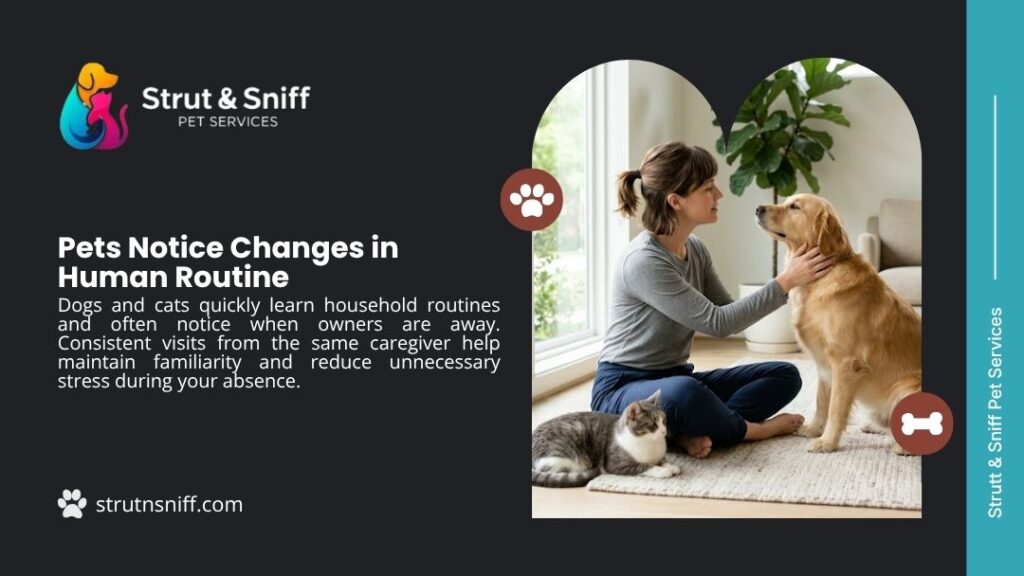
Drop-In Visit vs. Dog Walk vs. Overnight Pet Sitting
Pet-care terms can sound interchangeable until it is time to book. A drop-in visit, dedicated dog walk, and overnight stay serve different needs.
| Service | Primary purpose | Commonly included | Best suited to |
| Drop-in visit | In-home essentials and companionship | Food, water, potty or litter care, play, minor cleanup and an update | Cats, midday dog care and pets comfortable between visits |
| Private dog walk | Individual outdoor exercise and relief | Leash walk, waste collection, water check and walk report | Dogs that need structured physical activity |
| Overnight pet sitting | Extended companionship and household continuity | Evening care, overnight presence, morning routine and agreed home tasks | Anxious pets, travel and households requiring closer support |
| Pet taxi | Safe local transportation | Pickup, secure travel and handoff | Veterinary, grooming, daycare or other appointments |
A drop-in visit may contain a short walk if the owner requests it and the booking allows enough time. That walk isn’t automatically included with every provider. Feeding, medication and cleanup can leave little time for sustained exercise during a short appointment.
Owners whose main concern is physical activity should compare a private dog walk with a group walk. Private care often suits dogs with a particular pace, an established route, leash reactivity or discomfort around unfamiliar animals.
An overnight service is different again. Several daytime visits leave periods when no caregiver is present. An overnight pet sitter may be a better fit for pets that become distressed alone, need late-evening care, or benefit from a familiar bedtime and morning routine.
How Long Should an In-Home Pet Visit Last?
Strut & Sniff Pet Services offers 30- and 60-minute drop-in visits. The right duration depends on the number of pets, their normal routine, medication needs, temperament, and the amount of individual attention required.
A 30-minute visit may suit one adult pet with a straightforward routine. A 60-minute visit provides more time for multi-pet households, separate feeding arrangements, medication, additional litter care, or pets that need a slower approach.
That same period may feel tight in a multi-pet household. Separate meals, medication, a reluctant dog at the harness, several litter boxes, or a nervous animal that needs time to approach can quickly use the booking.
A 60-minute visit offers more room for individual attention, longer play, a more relaxed meal or additional cleanup. It may suit puppies, senior pets, high-energy dogs, social cats and homes with several animals.
Here’s the thing: the service clock includes secure entry, essential tasks, documentation and locking the home. Owners should ask how the provider measures visit time and whether a promised 30 minutes means 30 minutes at the property.
How Often Should a Pet Sitter Visit?
There isn’t one safe schedule for every dog or cat. The right frequency depends on the animal’s established bathroom routine, feeding times, age, health, medication, temperament, and total time without the owner.
One midday visit may be enough for an adult dog whose owner is at work. That doesn’t mean one visit is appropriate when the same owner leaves town overnight. Travel creates a longer care period, so the schedule must cover morning, daytime and evening needs.
Puppies generally require more frequent opportunities for relief and supervision. Senior dogs may also need shorter intervals, particularly when mobility, continence or medication affects their day. Owners should follow advice from their veterinarian when a medical condition influences the care schedule.
Cats may use litter boxes, but that doesn’t remove the need for regular human checks. Food can spoil, water can spill, automatic equipment can fail, and health or behavior can change. Daily care also provides litter maintenance and confirms that the cat is safe inside.
Some animals cope well with correctly scheduled drop-ins. Others need longer companionship. A complimentary pet-care meet and greet allows the owner and caregiver to review the normal routine before deciding whether short visits, extended appointments, or overnight care make sense.

Pet-Care Instructions Owners Should Provide
Even a skilled caregiver can’t follow a routine that was never explained. Written pet sitting instructions reduce guesswork and provide a reference when the owner isn’t immediately available.
A pet-care information sheet should identify every animal and describe food quantities, meal times, treats, water, potty or litter habits, exercise, household boundaries and normal behavior. It should explain where the pet tends to hide and what signs would be unusual.
Medication directions need extra care. The document should state the medicine, dose, time, storage method, and approved way to administer it. The owner should demonstrate any special technique beforehand, and the sitter must accept the responsibility before the booking. A caregiver should never change the dose or substitute treatment independently.
The ASPCA recommends giving a pet sitter information about the animal’s age, weight, current health concerns, medication, diet, and microchip. Those facts can become critically important during an emergency.
The pet sitter information sheet should also include the owner’s itinerary, several contact methods, a trusted local contact, the regular veterinary practice and the preferred emergency clinic. Written veterinary authorization should explain what the sitter may do if the owner can’t be reached.
Home instructions belong in the same conversation. The sitter needs accurate details about keys, entry codes, alarms, cameras, gates, cleaning supplies, thermostats and waste disposal. They should also know whether a neighbor, housekeeper or maintenance worker may enter during the booking.
The American Kennel Club advises owners to leave veterinary information, emergency authorization and a backup physical key because keypad batteries or electronic access systems can fail.
Strut & Sniff Pet Services pet-care process begins before the first paid check-in so routines, access and expectations can be documented in advance.
What a Professional Visit Report Should Show
A message that says “All good!” may sound cheerful, but it gives the owner very little information.
Professional pet sitter notes should confirm which animals were seen, what food was served, whether fresh water was provided, and whether medication was completed. For a dog, the report may mention the potty break, walk, or yard activity. For a cat, it may cover food intake, litter-box care, and whether the cat chose to interact.
The sitter should record anything outside the normal routine. That might include a partially eaten meal, an accident, loose stool, a pet that remained hidden, low food supplies or a maintenance concern inside the home.
Photographs support the report, but they don’t replace it. One happy-looking image cannot show whether the sitter refreshed the water, secured the gate or followed medication instructions.
Strut & Sniff provides real-time visit information, recorded arrival and departure details, photographs and written care reports. When a walk forms part of the service, GPS route information provides an additional record. For Houston owners at work or away from the city, these updates answer the question that naturally follows every booking: “How did my pet do?”
Houston Heat and Home-Safety Checks
Houston weather can change a routine that looked reasonable when the booking was made. High temperatures, humidity, storms and hot pavement may make a normal outdoor plan unsuitable.
On a very hot day, a sitter may replace a longer walk with a brief relief break and spend the remaining time on fresh water, indoor play and companionship. That adjustment should reflect the individual pet, current conditions and the owner’s instructions.
The sitter should also notice whether the home feels unusually warm, whether the air-conditioning appears to operate and whether water remains available. They aren’t expected to repair an HVAC system, but an unexpectedly hot house should prompt immediate communication.
Outdoor safety starts before the pet crosses the doorway. Gates need to be secure, walking equipment should fit correctly, and severe weather may require the sitter to delay or modify the activity. The owner should receive an honest explanation whenever safety changes the planned visit.
Strut & Sniff Pet Services serves pet owners throughout central, inner-loop, west and southwest Houston. Owners can review the company’s Houston service areas to check availability in their neighborhood.
FAQs
What tasks does a cat sitter typically perform?
A cat sitter follows feeding instructions, provides fresh water, services the litter box, checks for minor messes, and confirms the cat is safely inside. The remaining time may include play, brushing, affection, or quiet companionship, depending on what the cat accepts. The visit report should mention food, litter use, behavior, and anything unusual.
Does a pet-sitter check-in include a dog walk?
A check-in may include a short walk when it has been requested and enough time was booked. It isn’t automatic. A drop-in visit often divides time among food, water, potty care, medication, cleanup and companionship, while a dedicated dog walk focuses primarily on outdoor exercise.
Do pet sitters stay overnight?
Some pet sitters offer overnight care as a separate service. A standard check-in ends after the scheduled appointment and doesn’t provide continuous supervision. Owners should confirm arrival windows, visit frequency, and whether any overnight presence is included.
Can a pet sitter administer medication?
A sitter may give approved medication when the task has been discussed, accepted, and documented. The owner should provide precise instructions and demonstrate the method when necessary. A pet sitter should not diagnose a condition, alter a prescribed dose or choose a different treatment without veterinary direction.
How many times per day should a sitter visit a dog?
The schedule should match the dog’s usual feeding, bathroom, medication and social routine. One midday appointment may suit a workday, whereas travel often requires several daily visits or overnight support. Puppies, older dogs and pets with special care requirements may need more frequent attention.
What should I ask a pet sitter before hiring?
Ask what a standard visit includes, how visit time is recorded, whether photographs and written notes are sent, who will enter the home, and what happens if the primary sitter becomes unavailable. You should also discuss insurance, access security, emergency procedures, pet behavior and veterinary authorization.
How much does a drop-in pet visit cost in Houston?
Rates vary by visit length, number of pets, location, timing and care complexity. Strut & Sniff Pet Services currently lists 30-minute drop-in visits from $35 and 60-minute visits from $65. Final pricing may vary by location, number of pets, timing, care complexity and availability. Check the company’s current pet-care pricing before booking.
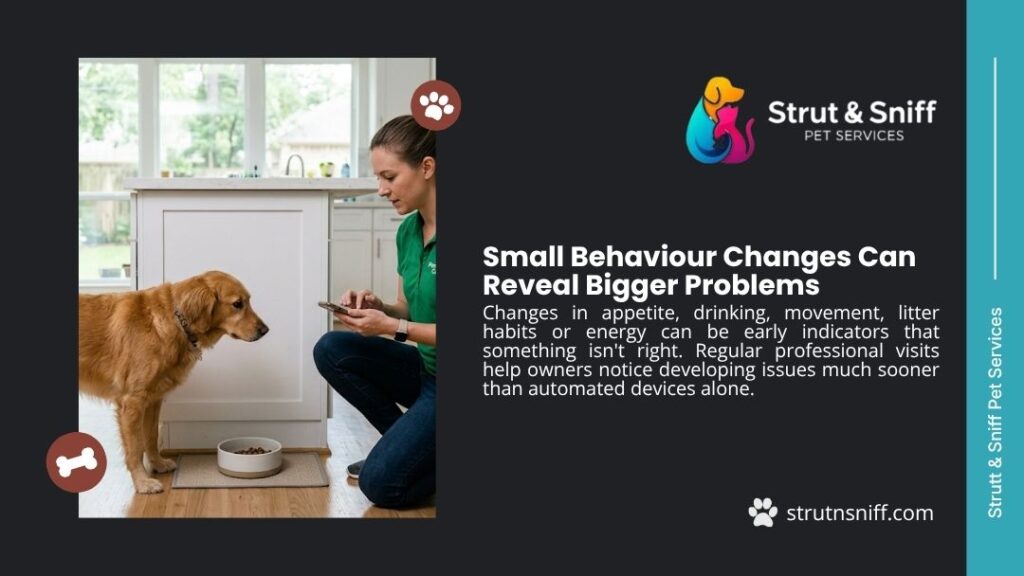
Dependable Care Begins Before the Door Opens
What does a pet sitter check-in visit include when the service is handled professionally? It includes the practical work your pet needs, the judgment to notice a meaningful change, and the communication that lets you carry on with your day without guessing.
The sitter should arrive securely, follow the documented routine, give your pet appropriate attention, and leave the home properly locked. You should receive more than a smiling photograph. You should know whether your pet ate, drank, used the bathroom, took any scheduled medication, and behaved as expected.
That is the difference between someone merely stopping by and a professional pet caregiver building trust one visit at a time.
If you need reliable in-home pet care in Houston, schedule a complimentary meet and greet with Strut & Sniff Pet Services. Your sitter can learn your pet’s routine, review home access and emergency instructions, and recommend the right visit length before the first booking.
