
You’ve filled the automatic feeder, topped up the water fountain, and pointed a camera toward your cat’s favorite chair. On the surface, everything looks ready for a three-day trip. Cats are independent, after all. Surely yours will spend most of the weekend sleeping.
That plan sounds reasonable until a feeder jams, a water bowl tips over, or your cat becomes sick where the camera cannot see them.
So, is it safe to leave your cat alone for 3 days? Three days away can work. Three days completely unobserved shouldn’t be the plan. A healthy adult cat may remain in its familiar home while you travel, but someone should walk through the door at least once each day.
Is It Safe to Leave My Cat Alone for 3 Days?
It isn’t advisable to leave a cat completely alone for three days. Even when plenty of food, water, and litter are available, three unattended days create risks that no automatic device can fully manage.
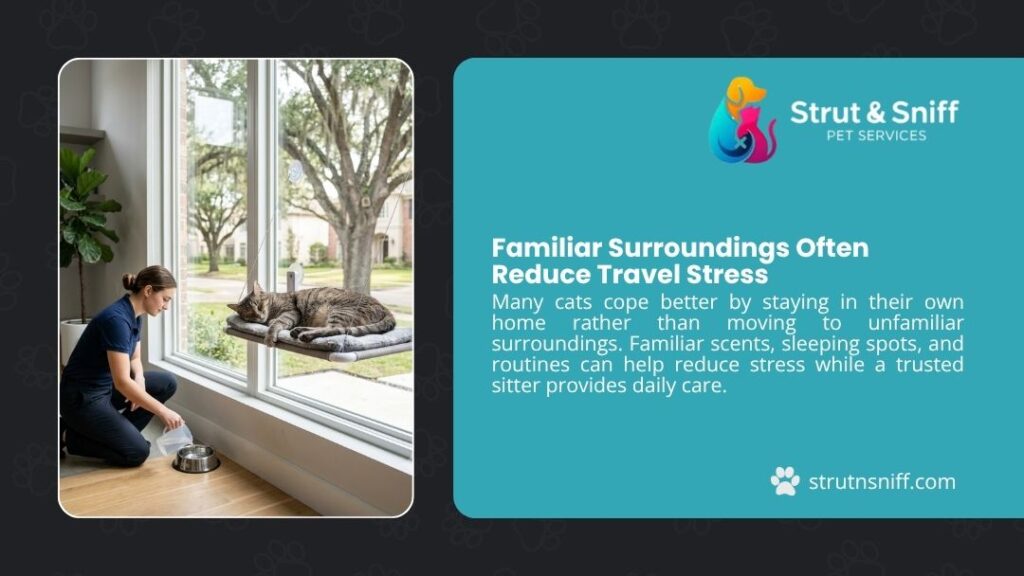
A healthy, settled adult cat may do well at home during a three-day absence when a reliable person visits every day. In fact, remaining at home can be less disruptive for some cats than moving to an unfamiliar boarding environment. Your cat keeps the same sleeping places, familiar smells and usual territory while receiving the practical care and supervision it needs.
This doesn’t apply equally to every cat. Kittens, senior cats, anxious cats and pets with health conditions often need more frequent attention. Feeding schedules, medication, temperament and recent health changes all affect how long a cat can be left alone safely.
PetMD’s veterinarian-reviewed guidance offers a clear boundary: “If you’ll be away for more than 24 hours, arrange for a pet sitter.”
For a three-day trip, that means planning care before you leave, not waiting to see whether the feeder and camera will be enough.
How Long Can Cats Be Left Alone?
There isn’t one universal time limit for every cat. Age, health, personality, feeding routine, and home conditions all matter.
Most healthy adult cats can manage a normal workday alone. An occasional overnight absence may also be manageable when the cat has fresh water, appropriate food, a clean litter box, and a safe indoor environment. Once an absence extends beyond 24 hours, in-person care becomes important.
Hill’s Pet Nutrition advises arranging care when you’ll be gone longer than 24 hours and recommends at least one daily check-in for trips of three days or more.
| Cat or situation | General care consideration |
| Healthy adult cat | Usually comfortable during a normal 8–12-hour workday |
| Healthy adult left overnight | May manage occasionally with proper preparation |
| Three-day absence | Needs at least one dependable in-person visit each day |
| Kitten | Requires more frequent feeding, supervision, and interaction |
| Senior cat | May need shorter intervals because of age-related changes |
| Cat taking medication | Visits must follow the prescribed medication schedule |
| Recently ill or recovering cat | Needs a care plan approved by its veterinarian |
| Anxious or highly social cat | May benefit from longer or twice-daily visits |
| Multi-cat household | Every cat must be located and checked individually |
These are planning guidelines, not a substitute for veterinary advice. If your cat has diabetes, urinary problems, kidney disease, mobility limitations or another ongoing condition, ask your veterinarian how frequently someone should check on them.
Why Food, Water and a Camera Aren’t Enough for 72 Hours
Modern pet-care technology is genuinely useful. Automatic feeders preserve meal timing, fountains encourage drinking and cameras help owners look in from a distance. The problem arises when those conveniences are treated as replacements for human care.
Automation covers supply. It doesn’t cover supervision. The greatest risk isn’t simply loneliness. It’s delayed detection. A camera may show an empty room, but it can’t tell you whether your cat is sleeping comfortably, hiding because something is wrong, or trapped behind a closed door.
| Equipment | What it helps with | What it cannot reliably do |
| Automatic feeder | Dispenses scheduled portions | Fix a blockage or confirm that food was eaten |
| Water fountain | Keeps water circulating | Restart itself after a power or pump failure |
| Pet camera | Provides a limited remote view | Examine a sick, injured, trapped, or hiding cat |
| Self-cleaning litter box | Removes some waste automatically | Assess abnormal urine, stool, or repeated straining |
| Smart thermostat | Reports indoor temperature | Restore air conditioning or move the cat to safety |
| Motion sensor | Detects activity in one area | Explain why activity suddenly changed |
Food and water problems aren’t the only concerns. Cats can vomit, become injured, knock over containers, chew something unsafe, or stop using the litter box. A door can swing shut and separate a cat from its supplies. In a multi-cat home, one pet may block another’s access to food or litter.
What Should a Daily Cat-Sitting Visit Include?
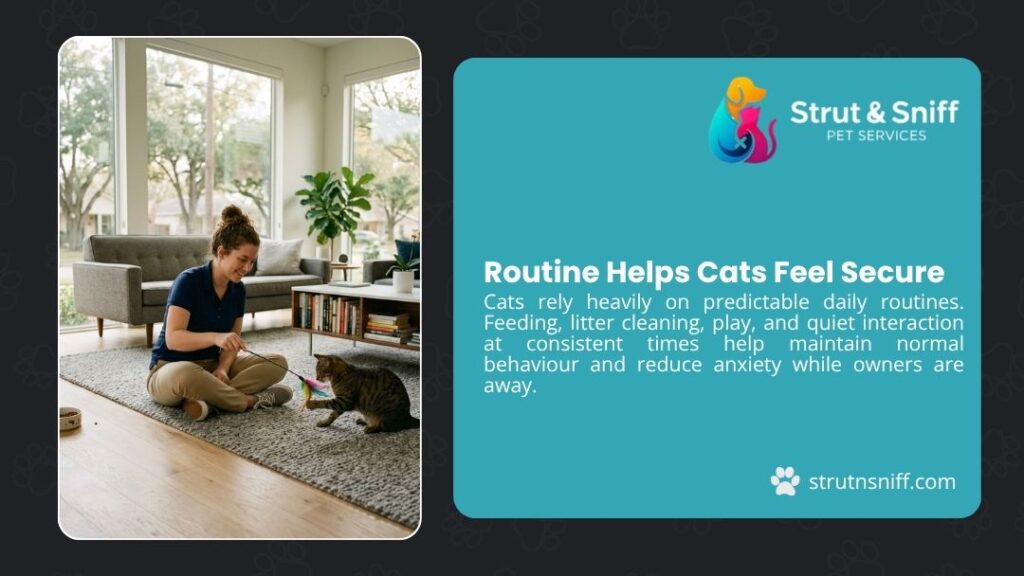
A proper drop-in visit involves more than opening a can and leaving five minutes later. The caregiver should see the cat, complete its routine, and look for changes that may need attention.
| Part of the visit | What should happen |
| Visual check | Locate and physically see every cat in the home |
| Food | Serve the correct meal and check whether previous food was eaten |
| Water | Wash or refresh bowls rather than simply topping them off |
| Litter | Scoop the box and note meaningful changes in use |
| Medication | Follow the written, veterinarian-directed schedule when agreed |
| Wellness observation | Notice changes in movement, breathing, appetite, grooming or behavior |
| Companionship | Provide calm interaction, affection or play based on the cat’s preference |
| Home security | Check relevant doors, windows and indoor temperature |
| Cleanup | Address food spills, litter scatter, accidents or vomit |
| Owner update | Send photographs, care notes and any concerns promptly |
A shy cat may not come running when the sitter arrives. That doesn’t mean the visit should end without confirming where the cat is. The caregiver may need to check known hiding places calmly and avoid forcing interaction.
At Strut & Sniff Pet Services in-home pet visits, care can include feeding, fresh water, litter box cleaning, companionship, medication care according to written instructions when the service has been approved, photos, and visit notes. New clients begin with a complimentary meet and greet so the sitter can learn the cat’s routine before the owner travels.
Which Cats Need More Than One Daily Visit?
One daily visit is a practical minimum for many healthy adult cats during a short trip. It isn’t automatically the right schedule for every household.
Kittens need closer supervision because they eat more frequently, explore unsafe spaces, and can get into trouble quickly. Leaving a kitten alone for three days with only one brief daily visit would generally be unsuitable.
Senior cats may also require more attention. Some remain healthy and independent, while others need medication, extra meals, mobility help or closer monitoring. Age alone doesn’t determine the schedule, but age-related health changes should be taken seriously.
| Cat’s circumstances | Care that may be more appropriate |
| Healthy, independent adult | At least one substantial daily visit |
| Social or separation-sensitive cat | Longer or twice-daily companion visits |
| Young kitten | Multiple visits or continuous care |
| Senior cat with a stable routine | One or more visits based on individual needs |
| Cat requiring timed medication | Visits aligned with veterinary instructions |
| Recently sick cat | Vet-approved care plan, possibly overnight support |
| Multiple cats | Enough visit time to observe and care for each one |
| Cat with a history of urinary problems | Closer monitoring directed by a veterinarian |
If you’re uncertain, consider what your cat normally receives during a full day: meals, clean litter, attention, observation and help when something goes wrong. Vacation care should preserve as much of that routine as reasonably possible.

A Three-Day Vacation Cat-Care Schedule
A written plan makes a short trip much easier for the owner and sitter. It also prevents small but important instructions from being lost in a string of last-minute messages.
| Time | Recommended action |
| Before departure | Confirm the sitter’s schedule, refresh food and water, clean litter boxes, secure hazards, and verify home access |
| Day one | Locate the cat, serve food, refresh water, scoop litter, provide interaction and send an update |
| Day two | Repeat routine, compare appetite and litter use with day one, check the home and report changes |
| Day three | Complete normal care, confirm supplies and prepare the cat’s routine for the owner’s return |
| Delayed return | Notify the sitter immediately and extend scheduled care rather than relying on leftover supplies |
Schedule the first visit according to your cat’s normal feeding and care routine rather than waiting until the end of the first full day. If you leave early in the morning and won’t return until late on the fourth calendar day, your “three-day trip” may be much longer than 72 hours from the cat’s perspective. Count actual hours and overnight periods rather than relying only on calendar dates.
How to Prepare Your Home Before Leaving Your Cat
Begin with the everyday routine. Sudden food, litter, or equipment changes can create unnecessary stress. If you plan to use an automatic feeder or fountain, introduce it well before the trip and make sure your cat uses it comfortably.
Provide water in more than one location. A fountain can stop during an outage, while an ordinary backup bowl remains available. Clean each litter box before leaving, and provide enough suitable boxes for the household. Don’t introduce a completely unfamiliar litter setup on departure day.
Remove hazards such as string toys, loose cords, unstable objects, toxic plants, open washer or dryer doors, and accessible chemicals. Check that interior doors cannot swing shut and trap the cat away from food, water, or litter.
Safe enrichment may include a familiar scratching post, a secure window perch, puzzle feeders your cat already knows how to use, and toys intended for unsupervised play. Put away anything that could tangle around the cat or break into small pieces.
Finally, tell the sitter where your cat normally hides. “She didn’t come out” is far more worrying when nobody knows whether she is under the bed, inside a closet, or somewhere she shouldn’t be.
Houston Heat, Power Outages and Travel Delays
In Houston, vacation cat care must account for more than meals and litter. Extreme heat can make an air-conditioning failure dangerous, especially when a home remains closed for several days.
A smart thermostat can alert you to rising temperatures, but somebody nearby still needs the ability to respond. Your sitter should know where the thermostat is, how to contact you, and whom to call if the home becomes unsafe.
| Houston-related risk | Preparation |
| Air-conditioning failure | Use temperature alerts and authorize a local person to respond |
| Power outage | Provide ordinary water bowls and non-electric backup supplies |
| Severe storm | Confirm whether the sitter can safely continue scheduled visits |
| Hurricane conditions | Create an evacuation or alternate-care plan before traveling |
| Flight cancellation | Keep the sitter available until you physically return |
| Road flooding | Identify a backup caregiver who can reach the home safely |
| Mobile or internet outage | Leave written instructions and direct emergency contacts |
If severe weather is forecast, don’t assume a normal drop-in schedule will remain possible. Discuss contingencies before leaving and consider overnight care or postponing travel when appropriate.
Daily Visits, Overnight Sitting or Boarding?
The best arrangement depends on your cat, not simply the number of nights you’ll be gone.
| Care option | Usually works well for | Main consideration |
| Once-daily visits | Healthy, independent adult cats on short trips | The visit must include observation and meaningful care |
| Twice-daily visits | Social cats, multiple meals or closer monitoring | Provides more interaction and shorter gaps |
| Overnight pet sitting | Anxious, senior or higher-need cats | Maintains more of the household routine |
| Trusted friend or relative | Cats already comfortable with that person | The person must be dependable and follow instructions |
| Boarding | Cats needing structured supervision when home care isn’t suitable | A new environment may be stressful for shy cats |
Shy cats often prefer staying in their own territory, provided the visiting sitter understands that quiet observation may be more appropriate than forced affection. A highly social cat, on the other hand, may struggle with one short visit every 24 hours and benefit from longer companionship or overnight care.
Information to Leave for Your Cat Sitter
A useful care sheet should make sense even if the sitter needs to act quickly. Avoid vague instructions such as “give her usual amount” or “call the vet if needed.”
| Information | Details to provide |
| Feeding | Food type, portion, timing and storage location |
| Water | Bowl and fountain locations and cleaning instructions |
| Litter | Box locations, disposal method and normal habits |
| Medication | Exact veterinarian-directed instructions |
| Behavior | Normal temperament, hiding places and known triggers |
| Health | Relevant conditions and recent changes |
| Veterinarian | Clinic name, phone number and address |
| Emergency hospital | Nearest appropriate facility and contact number |
| Authorization | Instructions for obtaining urgent veterinary care |
| Home access | Key, alarm and entry information |
| Emergency contact | A local person authorized to help |
| Travel details | Departure, expected return and communication availability |
| Carrier | Exact location in case transportation is necessary |
Complete the free meet and greet far enough in advance to discuss these details without rushing. It also allows your cat to encounter the caregiver while you are still home.
What Changes Should a Cat Sitter Report Immediately?
You know your cat’s ordinary behavior better than anyone. The sitter needs enough context to recognize when something is different.
Prompt communication is important if the cat cannot be located, refuses food, vomits repeatedly, develops diarrhea, appears unusually weak, breathes abnormally, shows signs of injury, or suddenly behaves very differently.
Litter-box changes also matter. Repeated straining, distress in the box, or apparent inability to urinate requires urgent veterinary attention, particularly in male cats. The sitter should follow the emergency instructions you and your veterinarian established rather than attempting to diagnose or treat the problem independently.
Not every unusual moment is an emergency. A shy cat might skip playtime or remain under the bed. That’s why consistent visit reports are so useful: they allow the owner and caregiver to notice patterns instead of judging one isolated behavior.
Planning Cat Care for Four Days, a Week or Longer
Leaving a cat alone for four days or a week doesn’t become safe by adding a larger bag of food. The longer the trip, the more important reliable human care becomes.
Daily visits should continue throughout the entire absence. For longer trips, twice-daily visits or overnight pet sitting may provide better companionship and closer monitoring. Cats requiring medication, frequent meals, or additional observation need schedules based on those needs rather than the owner’s travel duration.
You’ll find plenty of online stories from owners whose cats appeared fine after several unattended days. Those experiences may be honest, but they don’t remove the risks of equipment failure, illness, or delayed treatment.
A camera remains helpful between visits, but it is only one part of the plan. If the app shows something concerning, a local caregiver must be able to enter the home and respond.
Your return plan matters too. Flights get cancelled, roads flood, and work trips run long. Arrange care through the time you expect to be physically home, and make sure the sitter can extend service if your arrival changes.
FAQs
Can I leave my cat alone for two days?
A healthy adult cat might tolerate an occasional overnight absence, but leaving one completely unattended for two full days introduces preventable risks. If you’ll be away longer than 24 hours, arrange an in-person visit to refresh supplies, clean litter, and check your cat’s condition.
Can I leave two cats alone for three days?
Having two cats doesn’t remove the need for human care. They may provide companionship, but they can still run out of water, become ill, fight, or prevent one another from reaching shared resources. A sitter should visit daily and confirm that both cats are safe, eating, and using the litter boxes.
How often should a sitter visit my cat?
A healthy adult cat should generally receive at least one meaningful visit each day during a three-day trip. Kittens, senior cats, anxious cats, and those with medical or medication needs may require more frequent care.
Do cats get lonely when their owners travel?
Some do. Cats differ considerably in sociability, but many form strong attachments to their people and routines. Signs of distress may include hiding, unusual vocalization, appetite changes, inappropriate elimination, overgrooming, or withdrawal.
Can an automatic feeder replace a pet sitter?
No. It can maintain meal timing, but it cannot confirm that your cat ate, observe illness, clean litter, provide care during a malfunction, or respond to an emergency.
Should I leave extra litter boxes while traveling?
An additional clean box may help, especially in a multi-cat household, but it doesn’t eliminate the need for daily maintenance. Introduce any new box before your trip so your cat is familiar with it.
Is boarding or in-home care better for a shy cat?
Many shy cats are more comfortable remaining in familiar surroundings with a calm visiting sitter. Boarding may be appropriate when closer supervision is necessary or reliable home care isn’t available. Consider your cat’s temperament, health, and previous response to unfamiliar environments.
Arrange Reliable Vacation Cat Care in Houston
So, is it safe to leave your cat alone for 3 days? Three days apart may be manageable. Three days unobserved isn’t worth the risk. Daily visits provide something no feeder, fountain, or camera can offer: a capable person who can see your cat, notice changes, and step in when plans go sideways.
Strut & Sniff Pet Services provides personalized in-home pet visits for Houston cat owners who want dependable care and clear communication while they’re away. Your sitter can follow the established routine, refresh food and water, maintain the litter box, spend time with your cat, and send photos and visit notes.
One meaningful visit a day can keep the routine moving, catch problems early, and save you from refreshing the camera app at the airport. Start with a complimentary meet and greet so your sitter can learn your cat’s habits before your trip begins.
