
Most adult dogs do best with two daily walks and a planned relief break when their owner works full time. Some dogs need more support, especially puppies, senior dogs, apartment dogs, anxious pets, and dogs with a high energy level, and best practice care approaches for these common needs vary by dog. A healthy dog schedule usually includes a walk before work, a midday visit or short outing, and another walk after work. In this article, we explore how often should a dog be walked when owner works full time, how long dog walks should be, when potty breaks matter most, and how Houston owners can build a safer routine around work, weather, and real life.
How Often Should a Dog Be Walked When Owner Works Full Time
For many adult dogs, the most realistic answer is two walks a day, plus one midday potty break or short visit if the dog is home alone for six hours or more. That routine gives your dog a chance to stretch, sniff, relieve themselves, and settle back down without spending the whole workday waiting at the door.
A walk is not just exercise. It is information. Your dog reads the world through scent, sound, movement, routine, and your pace on the leash. That is why a rushed two-minute bathroom trip rarely replaces a proper walk dog routine. A morning walk can help your dog start the day calmly. A midday break can prevent discomfort and restlessness. An evening walk gives you both time to reconnect after work.
“Most dogs need at least 1–2 walks per day, unless otherwise specified by your vet,” according to PDSA’s dog exercise guidance, which also explains that slower sniff walks can support a dog’s mental health as well as physical fitness — a point echoed by research on dog walking and adequate physical activity.
That point matters for working owners. If your dog spends most of the day indoors, walks per day should not be measured only by miles or minutes. They should also be judged by comfort, routine, potty breaks, and whether your dog stays mentally stimulated while you are away.
The Simple Answer: Most Workday Dogs Need Two Walks and One Relief Break
A full workday can feel long from a dog’s point of view. You leave before traffic gets bad, answer messages all day, run one errand after work, and suddenly your dog has gone eight or nine hours without a real break. Some adult dogs can manage that once in a while, but it is not ideal as a daily plan.
For most working owners, the easiest routine is a morning walk, one midday potty break or dog walker visit, and an evening walk. If you are trying to work out how many pet visits a day your dog needs while you are away, our Houston owner’s guide breaks it down by age, bladder capacity, and how long your workday actually runs. This does not have to be complicated. It just has to be consistent.
| Time of day | What your dog needs | Why it helps |
| Morning before work | A 15–30 minute walk, breakfast, and a calm goodbye | Helps with potty needs, movement, and a calmer start to the day |
| Midday | A short walk, potty break, or drop-in visit | Breaks up the long stretch alone and gives the dog a chance to reset |
| Evening after work | A 20–45 minute walk, play, or leash time | Burns energy, supports bonding, and helps the dog settle at night |
| Before bed | A quick potty trip if needed | Helpful for puppies, senior dogs, small dogs, and apartment dogs |
For Houston owners who cannot get home during the day, Strut & Sniff Pet Services private dog walking in Houston gives dogs a reliable break with professional care, real updates, photos, and GPS-supported visit reporting, so the routine does not depend on guesswork.
A dog with yard access may not need the same schedule as a dog in a high-rise apartment near Downtown Houston. A relaxed older dog may not need the same walk length as a young Labrador. Still, when people ask how often should a dog be walked when owner works full time, the safest general answer is this: plan for at least two proper dog walks and one planned relief break if the day runs long.
How Long Should I Walk My Dog Before and After Work?
The question of how long should I walk my dog depends on the dog in front of you. A 12-year-old senior dog with stiff hips may be happy with a slow 10-minute stroll. A young dog with plenty of energy may need 30 minutes before work and another longer walk after dinner. There is no honest one-size-fits-all answer.
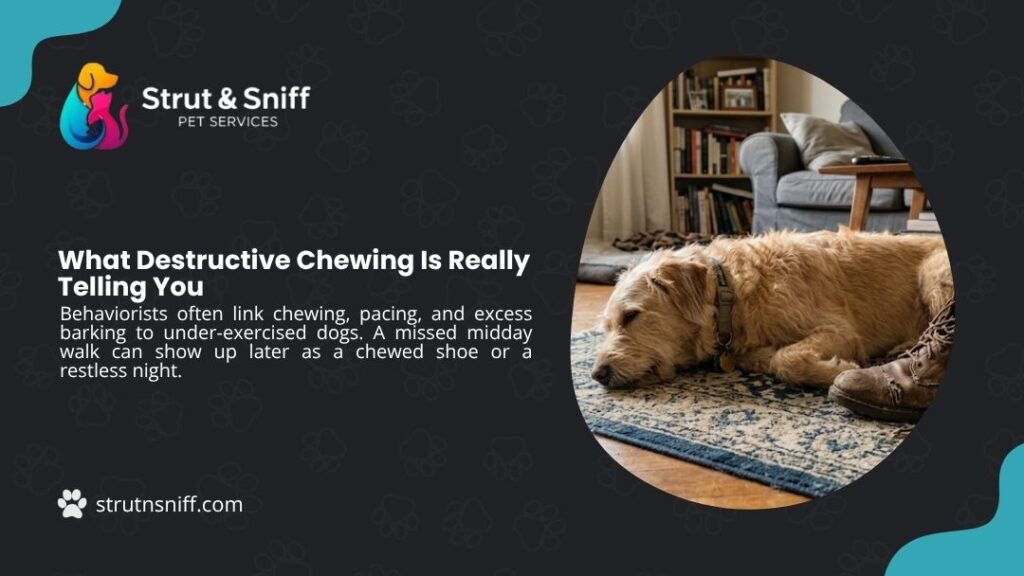
For many adult dogs, a 15–30 minute walk before work is enough to cover potty needs and light exercise. After work, a slightly longer walk can help make up for the quiet hours at home. If your dog pulls hard at the leash, races around the house at night, chews things they normally ignore, or acts frantic each time you reach for the leash, the current routine may be too light.
VCA Hospitals notes that walking exercises a dog’s mind as well as the body. New smells, new paths, outdoor sights, and time beside their person give dogs mental stimulation they cannot get from the same fenced yard every day. That is worth remembering when you are short on time. A slower sniff walk may be more useful than marching your dog around the block with no pause at all.
| Dog type | Morning walk | Evening walk | Daytime support |
| Low-energy adult dog | 10–20 minutes | 15–30 minutes | Helpful if alone more than 6 hours |
| Average adult dog | 20–30 minutes | 20–40 minutes | A potty break or short visit often works well |
| Active dog | 30–45 minutes | 30–60 minutes | Strongly recommended |
| Senior dog | 10–20 gentle minutes | 10–20 gentle minutes | Often helpful, especially with medication or stiffness |
| Puppy | Short, age-appropriate walks | Short play and leash practice | Frequent potty breaks are usually needed |
If you are still asking how long should you walk your dog, watch what happens after the walk. A satisfied dog usually rests, drinks water, and returns to normal behavior. A dog that limps, drags behind, pants heavily, or crashes hard may have done too much. PetMD’s dog walking guidance notes that many dogs in good body condition can handle a daily 20–30 minute walk, while overweight dogs may need shorter walks with more breaks.
How Many Walks a Day for a Dog Is Realistic With a 9–5 Job?
For a standard 9–5 job, two walks and one daytime relief break is realistic for many households. The morning walk does not need to be fancy. It needs to be dependable. The evening walk can be longer, calmer, and more social. The challenge is often the long stretch between breakfast and dinner.
If your dog is alone for four or five hours, a morning and evening walk may be enough for some adult dogs. If your dog is alone for six to eight hours, a dog walker, neighbor, or drop-in visit starts to make a lot more sense. If your dog is alone for nine hours or more, daytime care should be treated as part of basic comfort, not a luxury.
This is where the search phrase how many walks a day for a dog needs context. Dogs do not read the clock, but their bodies still work on a rhythm. They need chances to move, sniff, drink, potty, and feel safe. A dog that has to hold their bladder through a full office day may become uncomfortable even if they stay quiet about it.
For Houston pet owners, commutes can stretch a normal day into a long one. A meeting in the Galleria, traffic on I-10, a late stop near the Medical Center, or a delayed drive back to Montrose can add more time than expected. That is why a reliable visit can protect the routine. Strut & Sniff Pet Services drop-in pet visits are useful for dogs that need a potty break, fresh water, feeding support, medication help, or a little company while their owner is away.
A Dog Schedule for Working Owners That Actually Works
A good dog schedule for working owners should feel steady, not perfect. Dogs often do better when the broad pattern stays the same. Morning means outside time. Midday means relief and reassurance. Evening means attention, movement, dinner, and rest.
| Workday type | Morning | Midday | Evening | Best fit |
| Standard office day | Walk, breakfast, calm exit | Dog walker or drop-in visit | Longer walk and dinner | Most adult dogs |
| Hybrid workday | Walk before the first work block | Owner potty break | Evening walk or play | Flexible workers |
| Long commute day | Earlier walk before leaving | Professional dog walker visit | Short walk, meal, and rest | Houston commuters |
| Active dog day | Longer walk or structured leash time | Walk, enrichment, or park outing | Training walk or play | Dogs with more exercise needs |
| Senior dog day | Gentle walk and medication routine if needed | Short potty visit | Slow walk and quiet evening | Older dog care |
This sort of dog walking schedule is not only about avoiding accidents. It gives the day shape. Dogs tend to relax more easily when they know what comes next. A predictable routine can also help anxious dogs because the day feels less random.
If you work full time and your dog needs more than a short block walk, supervised dog park trips can help certain social dogs get more enrichment. Not every dog belongs at a dog park, of course. Some dogs prefer a quiet sidewalk, a familiar route, or a one-on-one walk. That is why the best routine starts with the dog’s real temperament, not a generic schedule copied from another household.

How Much Exercise Does a Dog Need When You Work Full Time?
The answer depends on age, breed, weight, health, and energy level. A small senior dog may need short, gentle walks. A fit young retriever may need much more time outside. A short-nosed dog may need careful limits in hot weather. A nervous rescue dog may need quiet routes before busier public spaces.
In general, adult dogs need daily movement, but the form can change. A walk around the block, a sniff-heavy route, a stroll for a senior dog, a structured heel session, or yard play can all count as activity. The important part is that the dog receives enough movement and mental enrichment to stay healthy and settled.
The American Veterinary Medical Association says walking helps preserve muscle tone and joint movement, and it can support weight control for overweight pets. That is one reason “how many miles should a dog walk a day” is not always the best question. A mile in Houston heat is not the same as a mile on a cool morning. A mile for a young shepherd is not the same as a mile for an older pug.
Breed also matters. Working and sporting dogs usually need more activity. Toy breeds may still need daily walks, but not at the same pace or distance. Senior dog care often works best with shorter, more frequent movement rather than one long route. When health issues are present, the vet’s advice should come first.
Do Dogs Need to Be Walked Every Day?
Most dogs benefit from daily walks. That does not mean every walk needs to be long, fast, or intense. Some days call for a short potty walk and indoor enrichment. Rain, extreme heat, injury, surgery recovery, or vet-directed rest can change the plan. Still, for a healthy dog, daily walks are one of the simplest ways to support weight, mobility, digestion, behavior, and emotional balance.
Do dogs need to be walked every day if they have a yard? Usually, yes. A yard helps with potty breaks, but it does not replace the experience of walking a dog through the neighborhood. Walks give a dog fresh scent trails, new sounds, social exposure, and time beside their owner. For many dogs, that shared routine is the best part of the day.
This is also why walking my dog should not feel like a chore squeezed into whatever time is left. It is basic care. And for owners with full calendars, it may be the main time of day when the dog gets exercise, attention, and a break from the house.
If travel, long shifts, or late meetings get in the way, overnight pet sitting can help keep a dog’s routine closer to normal while the owner is away.
When Is One Walk a Day Not Enough?
One walk a day may work for a calm adult dog with yard access, low energy, and plenty of attention at home. For many dogs, though, it is not enough. The signs usually show up in daily life before they show up on a calendar.
A dog may need more walks or better daytime support if they have accidents indoors, bark more than usual, pace at night, chew furniture, gain weight, pull hard from pent-up energy, or act overwhelmed the moment they step outside. These signs do not always mean the dog needs more miles. Sometimes they need a better dog routine schedule, more sniff time, more potty breaks, or more predictable care.
Active dogs often need more than one outing. Puppies need frequent potty breaks and short, safe exercise. Apartment dogs may need planned outdoor time because they cannot wander into a yard. A senior dog may not need a long route, but may need more chances to go outside. Dogs with anxiety may do better with short, steady outings than one long, overstimulating walk.
This is where how often should you walk a dog becomes a quality question, not just a number question. Two calm, useful walks may beat one long, chaotic walk. A short daytime walk from a trusted dog walker may prevent stress that builds over the entire day.
How Often Should You Take Your Dog Out to Potty While You Work?
Potty needs are separate from exercise needs. Some dogs can handle a long stretch without a break, but that does not mean it feels good. Puppies, senior dogs, small dogs, dogs on certain medications, and dogs with health issues may need more frequent trips outside.
A healthy adult dog may be able to wait through part of the workday, but many do better with a daytime break if the owner is gone six hours or longer. Puppies need far more support. A puppy schedule for working owners often requires help from a sitter, family member, neighbor, or professional dog walker because young dogs cannot reliably wait all day.
| Dog | Potty needs during a workday |
| Healthy adult dog | A daytime break is helpful if alone for six or more hours |
| Puppy | Frequent potty breaks and short, positive outdoor trips |
| Senior dog | Shorter, more frequent potty trips may be needed |
| Apartment dog | Planned walks or visits matter because there is no quick yard access |
| Anxious dog | A predictable routine can reduce stress and accidents |
If you are not sure how often to take your dog out during the workday, start with the dog’s comfort. Accidents, licking, whining, pacing, or a sudden rush to the door when you get home may all point to a schedule that needs adjustment.
A free meet and greet can help Houston owners talk through a realistic routine before booking regular care.
Houston Weather Changes the Best Time to Walk Your Dog
Houston changes the answer to how often should a dog be walked when owner works full time because weather can limit safe walk times. Summer heat, humidity, hot pavement, sudden storms, and heavy traffic all shape the day.
During warmer months, early morning and later evening walks are often safer than midday walks. A daytime visit may still be useful, but it may need to be shorter, slower, shaded, and focused on potty relief rather than hard exercise. Flat-faced breeds, thick-coated dogs, overweight dogs, puppies, and senior dogs need extra caution.
PetMD’s heat safety guidance notes that dogs can overheat quickly in warm weather, especially puppies, senior dogs, brachycephalic breeds, and dogs with medical conditions. In Houston, that warning matters for a large part of the year.
A practical Houston dog walking schedule may look different in July than it does in January. Morning walks can be longer when the pavement is cooler. Daytime visits can focus on potty, water, and comfort. Evening walks can be adjusted based on humidity, storms, and how hot the pavement still feels.
Strut & Sniff Pet Services serves Houston pet owners across central, inner-loop, west, and southwest neighborhoods, including Montrose, The Heights, Medical Center, Galleria, Bellaire, West University Place, Memorial, and nearby areas. Local route knowledge matters. A walker who knows how to adjust for shade, heat, apartment access, and traffic can make the routine safer. Houston owners can check the company’s local pet care service areas to see whether their neighborhood is covered.
Should You Hire a Dog Walker If You Work Full Time?
A dog walker is not only for people who are away on vacation. For many busy owners, a dog walker is the difference between a dog barely getting through the day and a dog having a calm, steady routine.
You may need a dog walker if your dog is alone more than six hours, lives in an apartment, has extra energy, needs medication support, gets restless in the afternoon, or cannot wait until evening for a potty break. A professional dog walker can also help when your schedule changes without much notice.
For Houston pet owners, this can be especially useful during long office days, Medical Center shifts, client meetings, downtown commutes, and travel-heavy weeks. The right walker does not simply clip on a leash and rush around the block. A trusted professional pays attention to safety, route, pace, behavior, hydration, weather, and communication.
Strut & Sniff Pet Services’ approach fits owners who want more than a low-cost app booking. Their Houston pet care services are built around licensed and insured care, real-time GPS tracking, visit reports, photos, and relationship-based service. That matters when someone is entering your home, handling your dog, and protecting the routine you worked hard to build.
What If Your Dog Needs More Than a Walk?
Some dogs need more than a walk. A very active dog may need a longer outing or structured activity. A social dog may benefit from supervised park time. A senior dog may need a gentle drop-in visit instead of a long walk. A pet with an appointment may need help getting to the vet or groomer. A family leaving town may need overnight care so the dog can stay in a familiar space.
That is why a full-time work routine should leave room for real life. A dog may need different support on different days. Monday may call for a normal walk. Tuesday may need a visit during the day. Friday may require pet transportation. A holiday weekend may call for overnight care.
Houston owners who need appointment support can use Strut & Sniff Pet Services’ local pet taxi service. Owners who need home cleanup support can also ask about pet waste removal, which can be useful for busy families, multi-pet homes, and owners who want the yard kept cleaner between work and travel.
A good care plan does not push every dog into the same box. It matches the dog’s age, home setup, routine, health, and personality.
How to Build the Right Dog Walking Schedule for Your Dog
Start with your real day, not the day you wish you had. What time do you leave? How long is the commute? Does your dog have yard access? Does your dog sleep while you are gone, or do they pace and bark? How old is your dog? How much exercise does your dog need based on health, breed, and energy level? These answers matter more than a generic rule.
If your dog is calm, healthy, and comfortable, a morning walk, daytime potty break, and evening walk may be enough. If your dog is still wired at night, gaining weight, having accidents, or showing stress, adjust the routine. Add a longer sniff walk. Hire a dog walker. Shorten walks during heat. Add training time. Try a slower pace for a senior dog. Build from what your dog shows you.
Pay attention to signs of too much exercise, too. More is not always better. Limping, lagging, heavy panting, paw soreness, stiffness, or unusual fatigue can mean the walk was too long, too hot, or too intense. Dogs need exercise, yes, but they also need judgment from the human holding the leash.
So, how often should a dog be walked when owner works full time? Often enough that the dog can move, potty, sniff, rest, and feel secure during the workweek. For many families, that means two walks, one daytime break, and a backup plan for long days.
FAQs About Walking a Dog When You Work Full Time
How often should I walk my dog if I work full time?
Most adult dogs do best with a morning walk, a daytime potty break or short dog walker visit, and an evening walk. The exact routine depends on age, breed, health, energy level, and how long your dog is alone.
Is two walks a day enough for a dog?
Two walks a day can be enough for many adult dogs, especially when paired with a daytime potty break. Puppies, active dogs, apartment dogs, and anxious dogs may need more support.
Can I walk my dog once a day?
One walk a day may work for some low-energy adult dogs with yard access, but many dogs need more than that. If your dog is restless, having accidents, gaining weight, or acting frantic outdoors, one walk may not be enough.
How long should I walk my dog before work?
A 15–30 minute walk before work suits many adult dogs. Dogs with more energy may need extra time, while senior dogs, overweight dogs, and short-nosed breeds may need shorter, gentler walks.
Should I hire a dog walker while I’m at work?
A dog walker can help if your dog is alone for six or more hours, needs a potty break, lives in an apartment, or does better with a steady routine. For many owners, daytime support keeps the day from feeling too long for the dog.
How often should you walk a puppy when you work full time?
Puppies need frequent potty breaks and short, positive walks. A full workday alone is usually too long for a puppy without help from a sitter, neighbor, family member, or professional dog walker.
How often should a senior dog be walked?
A senior dog often does best with shorter, gentler walks once or twice a day, plus potty breaks as needed. Some older dogs need more frequent outdoor trips, especially if they have arthritis, medication changes, or bladder issues.
Give Your Dog a Better Workday Routine
A full-time job does not have to mean a bored, uncomfortable dog at home. With the right schedule, your dog can get exercise, potty breaks, mental stimulation, and calm attention throughout the week. For many adult dogs, the best routine is simple: walk before work, add a daytime break, and walk again after work.
That is the heart of the answer to how often should a dog be walked when owner works full time. If a hired walker is covering the daytime break, it is worth reviewing what a quality midday walk includes before you book. The number matters, but the rhythm matters more. A dog that knows when care is coming can relax. A dog that gets time to sniff, move, and check in with a trusted person is more likely to settle into the workday without stress.
For Houston pet owners who need dependable support, Strut & Sniff Pet Services offers professional, local pet care built around trust, safety, communication, and real updates. If your workday keeps stretching longer than your dog’s routine allows, you can schedule a free meet and greet and build a dog walking plan that fits your pet, your neighborhood, and your schedule.
