
Most healthy adult dogs need three pet-sitter visits per day when their owner is away overnight: one in the morning, another around midday, and a third in the evening. Puppies, senior dogs, pets with medical needs, and dogs that struggle when left alone may require four or more visits, longer periods of care, or an overnight sitter.
| Dog’s situation | Suggested starting plan | Main consideration |
| Healthy adult dog | Three visits per day | Potty access, meals, movement and companionship |
| Independent adult with safe yard access | Two or three visits | Routine, supervision and the longest overnight gap |
| Puppy | Four or more visits | Age, bladder control, meals and house training |
| Senior dog | Three or four visits | Mobility, bladder changes and health monitoring |
| Dog on scheduled medication | Visits timed to veterinary instructions | Correct dose timing and observation |
| Dog distressed by being alone | Extended visits or overnight care | Short drop-ins may leave too much time alone |
| Multi-dog household | Similar frequency with longer visits | Each dog needs enough individual care |
Leaving your dog at home during a trip can feel simpler than boarding, particularly when your pet is happiest in familiar surroundings. The difficult part is deciding how often someone should stop by.
So, how many pet visits per day does a dog need when owner is away? Three is a sensible starting point for many healthy adults, but it isn’t a magic number. A dog’s age, established routine, bladder habits, temperament, medication schedule and comfort with solitude all influence the answer.
There is another detail that owners sometimes miss: the full 24-hour timetable. Three daytime visits may sound generous, yet an early evening appointment followed by a late morning return can leave the dog alone for far longer than expected. A responsible plan looks at every interval, including the stretch overnight.
Strut & Sniff Pet Services is a locally based Houston pet-care company built around reliable, relationship-based service. The company is licensed, bonded, and insured, and its consistent, personalized approach helps pets remain in familiar surroundings while their owners receive clear reassurance about each visit.
How Many Pet Visits per Day Does a Dog Need When the Owner Is Away?
For most healthy adult dogs, arrange three pet-sitter visits across each full day of travel. A morning, midday, and evening schedule provides regular chances to go outside, eat, drink, move around, and spend time with a caregiver.
Some independent adult dogs may cope with two well-timed visits if that pattern genuinely reflects their normal routine and they have safe access to an appropriate potty area. Still, two visits can create gaps approaching 12 hours. Being physically able to wait that long doesn’t necessarily mean a dog is comfortable doing it day after day.
Four visits may suit puppies, senior dogs, high-energy pets, dogs accustomed to having someone at home, and animals that need medication or more frequent bathroom breaks. A dog with significant separation-related distress may need something different altogether. Several brief appointments can meet physical needs without providing enough companionship, which is when extended or overnight care deserves consideration.
One daily visit is rarely a suitable plan for a dog left alone overnight. An automatic feeder can dispense dinner, and a dog door may provide outdoor access, but neither can tell whether the dog is injured, ill, frightened, or without water. Regular human contact remains an important part of in-home pet visits.
A Three-Visit Dog-Sitting Schedule Across 24 Hours
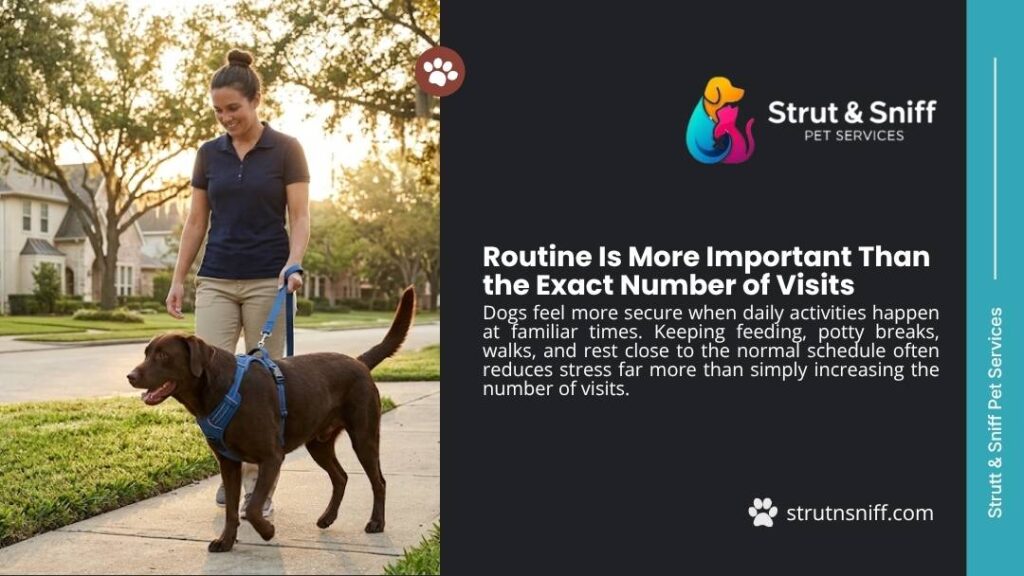
A useful schedule follows the dog’s usual day instead of forcing the pet into a completely new timetable. If breakfast normally arrives at 7 a.m. and the last potty break occurs around 10 p.m., the sitter’s visits should stay reasonably close to those times.
Here is a basic three-visit example:
| Visit | Example time | What the sitter handles | Time until next visit |
| Morning | 7:00 a.m. | Potty break, breakfast, fresh water, walk, and home check | 7 hours |
| Midday | 2:00 p.m. | Potty break, exercise, play, water and wellbeing check | 6 hours |
| Evening | 8:00 p.m. | Dinner, outdoor break, companionship and final household check | 11 hours |
That last column matters. Although the daytime appointments are reasonably spaced, an 8 p.m. visit followed by a 7 a.m. return creates an 11-hour overnight interval. A healthy adult that normally sleeps through the night may manage it, but a puppy, senior dog, or pet with urinary trouble may not.
Moving the final visit closer to bedtime can reduce the overnight wait. Another option is an overnight sitter who can provide a late potty break and respond if the dog becomes unsettled. The right arrangement depends less on a standard clock and more on what the dog already knows.
Departure and return days need separate calculations. If an owner leaves Houston at 5 a.m., the first sitter appointment cannot be planned as though the dog’s day began at noon. In the same way, a late flight home shouldn’t replace the final scheduled visit until the owner is certain they will arrive on time.
Two, Three or Four Drop-In Visits for Dogs?
The number and length of appointments work together, but they solve different problems. Four 15-minute stops create regular bathroom access without much sustained company. Two hour-long sessions offer more attention yet leave longer intervals between potty opportunities. Neither plan is automatically better.
| Daily plan | When it may work | Point to examine closely |
| Two visits | A select healthy adult with an established independent routine and additional potty access | Long daytime or overnight gaps |
| Three visits | Many healthy adult dogs accustomed to periods alone | Whether the overnight interval remains reasonable |
| Four visits | Puppies, senior dogs, high-energy pets or dogs with frequent care needs | Timing around meals, medication and rest |
| Overnight care plus a daytime visit | Dogs that dislike long periods alone or need closer observation | What hours and services the overnight stay includes |
When owners ask how often a dog sitter should visit, cost is often part of the decision. That is understandable, particularly during a long trip. Still, cutting one visit from the schedule may create a gap that the dog’s normal routine never includes. It is better to choose a plan the dog can follow comfortably than to solve accidents, distress, or disrupted habits after the trip.
For dogs that need someone nearby through the night, overnight pet sitting at home can preserve familiar sleeping, feeding and bathroom routines without moving the pet into a boarding environment.
How Age Changes a Dog Sitter’s Visit Schedule
Puppies Need More Frequent Potty and Meal Support
Puppies usually need more drop-in visits for dogs than healthy adults because their bladder control, house-training habits and daily routines are still developing. They may also eat more frequently, wake suddenly after naps and need to go outside soon after food, water or active play.
The American Kennel Club describes an age-based estimate often called the month-plus-one rule: a puppy’s age in months, plus one, gives a rough maximum number of hours it may be able to wait between bathroom breaks. A three-month-old puppy, for example, may manage about four hours. This is an estimate of physical capacity, not a target owners should stretch to its limit. Individual puppies, small breeds and dogs still learning to signal may need much shorter intervals.
A puppy’s visit also takes time. The sitter may need to open the crate calmly, clean an accident, serve a meal, wait for the puppy to eliminate outside, and allow a short period of safe play before settling it again. A hurried stop may not cover all of that.
Very young puppies may be poor candidates for drop-in-only care across a long trip. Depending on their age and home routine, extended supervision or overnight help may offer a safer and less disruptive plan.
Healthy Adult Dogs Often Start With Three Visits
An adult dog with reliable house training and no significant medical or behavioural concerns often does well with morning, midday and evening care. The schedule provides three opportunities for outdoor access while dividing the day into manageable periods.
The dog’s current routine remains the best reference. An adult used to four daily outings shouldn’t suddenly receive two because its owner has gone away. A pet that sleeps calmly during a normal workday may need less daytime company than one accustomed to a person working from home.
Veterinary behaviourist Dr. Carlo Siracusa Virga offers a useful upper boundary for planning alone time. “At a maximum, Dr. Virga recommends dogs spend no more than six to eight hours alone without a chance to relieve themselves,” according to the American Kennel Club’s guidance on alone time for dogs.
That statement should not be read as a promise that every adult dog is comfortable alone for eight hours. Bathroom capacity, emotional comfort and exercise needs are separate considerations. A six-hour gap may be manageable for one dog yet difficult for another.
Senior Dogs May Need Shorter Intervals
Age does not affect every dog in the same way. Some senior dogs retain their usual routine for years, while others begin to urinate more often, move slowly, become confused at night, or struggle to reach the door in time.
For that reason, senior dog care should reflect current behaviour rather than an old schedule that no longer fits. Three visits may still work for a healthy older pet, but four shorter intervals can be more comfortable when mobility or bladder control has changed.
Medication may also determine the appointment times. The owner should give the sitter written instructions that match the prescribing veterinarian’s directions, including the correct dose, timing, storage method, and steps to take if a dose is refused or vomited. A pet sitter’s medication services and limitations should be confirmed before the booking.
Potty Breaks Are Only Part of the Decision
Bathroom access is often the first concern, yet a proper visit does more than open the back door. The sitter should confirm that the dog appears alert and responsive, food and water remain available, the home temperature is safe, and the animal shows no obvious sign of illness, injury, or unusual behaviour.
That broader check is what gives the visit its value: you are not simply paying someone to glance at a food bowl. You are arranging for a familiar caregiver to notice whether your dog, the routine and the home environment appear as expected.
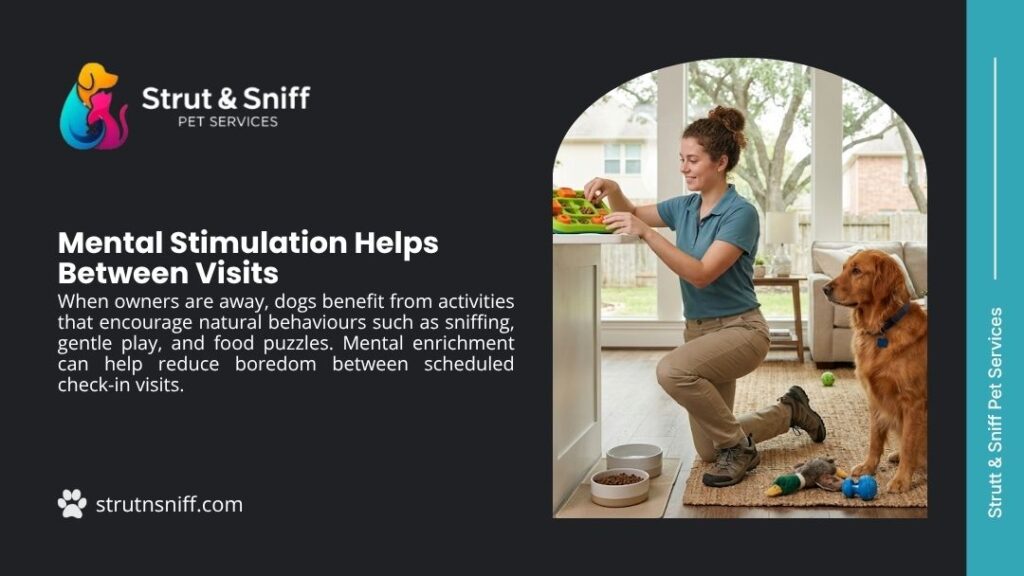
Dogs also need some form of movement and mental engagement. For one dog, that may mean a purposeful neighbourhood walk with time to sniff. Another may be better suited to gentle yard time, an indoor food puzzle or calm companionship. Age, weather, physical condition and temperament shape the choice.
A dog door can add flexibility, but it doesn’t replace observation. Gates can blow open, water bowls can spill, and wildlife or extreme weather can make an unsupervised yard unsafe. The longer the interval between human checks, the longer such a problem may go unnoticed.
Automatic feeders have similar limits. They can release a meal on schedule, but they cannot confirm that the correct dog ate it in a multi-pet household or notice that a dog has lost its appetite.
When exercise is a central need, a dedicated private dog walk tailored to the pet may provide more value than asking a short care visit to cover feeding, household checks, and a full walk at once.
When Drop-In Visits Aren’t Enough
The question is not simply how many visits to schedule, but whether drop-ins are the right format for your dog. Brief appointments can handle meals, potty breaks and routine checks, yet some dogs need longer companionship or closer supervision.
Separation-Related Distress
A dog that dislikes being alone may need more than regular potty access. Persistent barking, pacing, heavy drooling, destructive escape attempts, indoor elimination, or refusal to eat can indicate distress, though these behaviours are not enough to diagnose separation anxiety without a professional assessment.
Adding more short visits may reduce the time alone without resolving the problem. If the dog becomes distressed soon after each departure, it could spend much of the remaining interval upset. Longer companionship, an overnight sitter, or another care setting may be more appropriate.
Cornell University advises owners to build tolerance to absence gradually and warns against expecting a quick fix. Its guidance on anxious behaviour in dogs recommends positive methods and help from a qualified professional when necessary. Owners who notice severe or sudden behavioural changes should speak with their veterinarian before travel.
Scheduled Medication or Medical Monitoring
A fixed prescription schedule can determine how often a pet owner should have their pet sitter visit. If medication must be given every eight hours, two daily visits will not satisfy that schedule. A dog recovering from illness may also need closer observation, more frequent potty access, or extra time to move safely.
Care instructions should come from the veterinarian and owner, not from assumptions made during the visit. It is also important to confirm whether the sitter is comfortable and authorized to provide the required support. Oral tablets, injections, and complex medical procedures do not involve the same level of skill or risk.
If a dog’s condition is unstable, routine pet sitting may not be adequate. The veterinarian can help the owner decide whether travel should be postponed or whether veterinary boarding or medically trained care is more suitable.
Dog Sitting for a Week or Longer
Dog sitting for a week requires more thought than arranging help for one long day. A dog might tolerate an unusual gap once, yet find the same schedule difficult after several days without its owner.
Longer trips place more weight on companionship and behavioural observation. The sitter must notice gradual changes, such as reduced appetite, loose stool, unusual fatigue, anxiety, or reluctance to walk. Consistency also becomes more valuable because repeated changes of caregiver may unsettle a sensitive pet.
A complimentary pet-care meet and greet gives the owner and sitter time to review daily habits, access instructions, handling preferences and possible concerns before the first visit takes place.
Houston Weather Can Change the Visit Plan
Houston’s heat and humidity can turn an ordinary midday walk into an unnecessary risk. During hot weather, the longest outdoor activity may need to take place in the cooler morning or evening hours. The midday visit can still provide a prompt potty break, fresh water, indoor enrichment and a careful check of the dog’s comfort.
Pavement temperature matters too. A sunny surface may become dangerously hot even when the air temperature seems manageable. Short-nosed breeds, senior dogs, puppies, overweight pets and dogs with heart or respiratory conditions may need particularly cautious plans based on veterinary guidance.
Thunderstorms introduce a different problem. A dog frightened by thunder may refuse to go outside or try to bolt when a door opens. The sitter should know the dog’s normal response, secure the leash before opening exterior doors, and avoid forcing prolonged outdoor exercise in unsafe conditions.
Location also affects scheduling. Traffic between Houston neighbourhoods can change arrival windows, so owners should discuss whether visits occur at an exact time or within an agreed service period. Strut & Sniff Pet Services serves several central, west, and southwest communities within its Houston pet-care service area.
How Long Should Each Drop-In Visit Last?
A 30-minute drop-in visit may be enough for a straightforward potty break, meal, water refresh, and a short period of attention. It can work well for an adult dog whose care instructions are simple and whose primary exercise occurs during another appointment.
A 60-minute visit allows more breathing room. It may accommodate a meaningful walk, slower care for a senior dog, medication support, or several pets with different feeding and handling needs. The extra time can also help a shy animal settle before the sitter approaches.
Visit length should reflect the actual workload. Unlocking the property, preparing meals, cleaning bowls, securing a harness, wiping paws and writing a report all require time. If a dog needs a 30-minute walk as well as feeding and home-care tasks, a 30-minute booking is unlikely to cover everything properly.
The company’s Houston pet-care pricing lists 30- and 60-minute options, but final recommendations can vary with location, number of pets, timing and care complexity.
Prepare a Care Plan Before You Leave
A good handover removes guesswork. Written instructions should match what the owner explains during the meet and greet, particularly when food, medication or access details are involved.
| Information to provide | Why the sitter needs it |
| Feeding amounts and meal times | Prevents missed meals, excess food and digestive disruption |
| Potty and walking routine | Keeps the dog’s day familiar and reduces accidents |
| Medication instructions | Supports accurate timing and documentation |
| Veterinary and emergency contacts | Prevents delays if the dog becomes ill or injured |
| Behaviour and handling notes | Helps the sitter avoid fear, conflict or escape |
| Entry instructions and backup access | Reduces the risk of a missed appointment |
| Departure and return details | Determines care on the first and final travel days |
| Update preferences | Sets expectations for photographs, GPS records and visit notes |
Owners should also explain where leashes, waste bags, cleaning supplies, food and medication are kept. If the dog hides, guards food, fears certain noises or has a history of slipping through doors, that information belongs in the care plan.
The sitter needs authority to respond to an emergency as well. Provide the veterinarian’s contact details, an owner-approved emergency contact, and clear instructions about decisions or spending limits if the owner cannot be reached.
The pet-care booking process typically outlines account setup and scheduling steps to help users arrange services efficiently.
Questions to Ask Before Booking a Dog Sitter
A dependable sitter should be able to explain what happens if the regular caregiver becomes unavailable. Strut & Sniff Pet Services uses a relationship-based care model centered on a primary caregiver, with introduced backup coverage when needed. This supports familiarity without leaving a pet’s care dependent on one person’s availability.
Ask how each appointment is documented. Strut & Sniff Pet Services provides recorded arrival and departure details, photographs and written care reports. When a walk forms part of the visit, GPS information can provide additional visibility into the outing.
Owners should also understand how quickly the company reports a missed meal, loose stool, damaged entry point or concerning behaviour change.
Insurance and bonding deserve attention because the caregiver will enter the home and handle the pet. Strut & Sniff Pet Services is licensed, bonded and insured, giving Houston clients an important layer of professional accountability alongside personalized care.
Owners should also confirm emergency procedures, weather policies, cancellation terms and the process for reaching support outside ordinary office hours.
It is equally important to ask whether the same caregiver will return throughout the booking. Familiarity can help an anxious, shy or senior dog settle more easily. When backup coverage exists, an advance introduction is preferable to meeting a new person during an emergency. Further policy information is available in Strut & Sniff Pet Services pet-care FAQs.
FAQs
Is Two Pet-Sitter Visits per Day Enough for a Dog?
Two visits may be enough for a select healthy adult dog if they are carefully spaced, match its established routine and do not create an unsuitable overnight interval. However, many adult dogs benefit from three visits because that schedule provides better access to potty breaks, meals, movement, companionship and wellbeing checks.
A dog door can reduce dependence on the sitter for outdoor access, but it does not replace human supervision. The final plan should still account for water, weather, security, health and the dog’s response to being alone.
Can a Dog Be Left Alone for 12 Hours Overnight?
Some healthy adult dogs regularly sleep through a long overnight period, but 12 hours should not be treated as a safe universal standard. Age, hydration, medication, urinary health, and normal habits all affect how long a dog can wait comfortably.
Expert guidance commonly places six to eight hours at the upper end of time alone without a chance to relieve itself. If the proposed schedule creates a 12-hour gap, discuss a later bedtime appointment, an earlier morning return or overnight care.
How Often Should a Dog Sitter Visit a Puppy?
A puppy may need four or more daily visits, depending on its age, bladder control, meal schedule and stage of house training. Very young puppies can require bathroom opportunities every few hours and may not be suited to short drop-ins as their only form of care during extended travel.
The owner should start with the puppy’s existing routine and consult the veterinarian if feeding, vaccination status, or health affects the arrangement.
How Often Should a Dog Sitter Visit a Senior Dog?
Many senior dogs need three or four daily visits, though age alone does not determine the answer. A healthy older dog may keep its usual adult schedule, while a dog with reduced mobility, urinary changes, cognitive decline, or medication needs may require shorter gaps.
Recent accidents or sudden changes in bathroom habits should be discussed with a veterinarian rather than assumed to be a normal part of ageing.
How Often Should a Cat Sitter Visit?
Most cats should receive at least one visit every day while their owner is away. Kittens, senior cats, highly social cats, animals that eat wet food and cats with medical needs may require two visits.
Even an independent cat needs fresh water, food, litter care and daily observation. Automatic equipment cannot reveal whether the cat is ill, trapped in a room or refusing food.
Are Drop-In Visits or Overnight Pet Sitting Better for a Week Away?
Drop-in visits may suit an independent adult dog that rests comfortably alone and receives enough daily care. Overnight sitting may fit a dog that follows a late-night potty routine, dislikes long periods alone, requires closer observation, or benefits from a person sleeping in the home.
The length of the trip matters, but the dog’s behaviour matters more. A care arrangement should preserve the pet’s routine without asking it to tolerate longer periods alone than it normally experiences.

Build the Schedule Around Your Dog, Not a Generic Number
When deciding how many pet visits per day does a dog need when owner is away, use three daily visits as a practical starting point for a healthy adult, not as a rule that overrides the dog in front of you.
A puppy may need four or more appointments. A senior dog may require shorter intervals and slower care. A dog with separation-related distress could need extended companionship rather than another brief stop. Medication, feeding, Houston weather, and the full overnight gap can change the final schedule as well.
The best plan feels familiar to the dog and clear to the caregiver. It covers physical needs, protects the home routine, and gives the owner reliable information after each visit.
Planning a trip or a long day away? Strut & Sniff Pet Services can help match visit frequency, appointment length, and overnight support to your dog’s needs. Schedule a complimentary meet and greet to discuss your routine and service availability in Houston.
