
There’s a real difference between someone holding a leash and a professional dog walk. Knowing what a professional walk should cover helps you tell a quality provider from a quick loop around the block. A proper walk handles safety, structured exercise, enrichment, cleanup, and clear communication back to you. If you’re away for full days rather than a single midday break, work out how many daily visits your dog needs before you set a walk schedule. This checklist breaks down every part, whether you’re a Houston pet owner vetting a service or thinking about walking dogs for money yourself.
What Makes a Dog Walk “Professional” (Not Just a Stroll)
A professional walk isn’t measured in distance or minutes alone. It’s defined by structure, safety awareness, consistency, and communication. A pro reads the dog, adjusts to the weather, heads off problems before they start, and reports back so you know exactly how the visit went.
That matters because a walk is real care for your dog’s body and mind. Research summarized by Stanford Lifestyle Medicine points to how the human-animal bond and daily walking support health on both ends of the leash. Research summarized by Stanford Lifestyle Medicine points to how the human-animal bond and daily walking support health on both ends of the leash. A relationship-based walker who knows your dog delivers that far better than a rotating, app-dispatched stranger.
The Core Components Every Professional Dog Walk Should Include
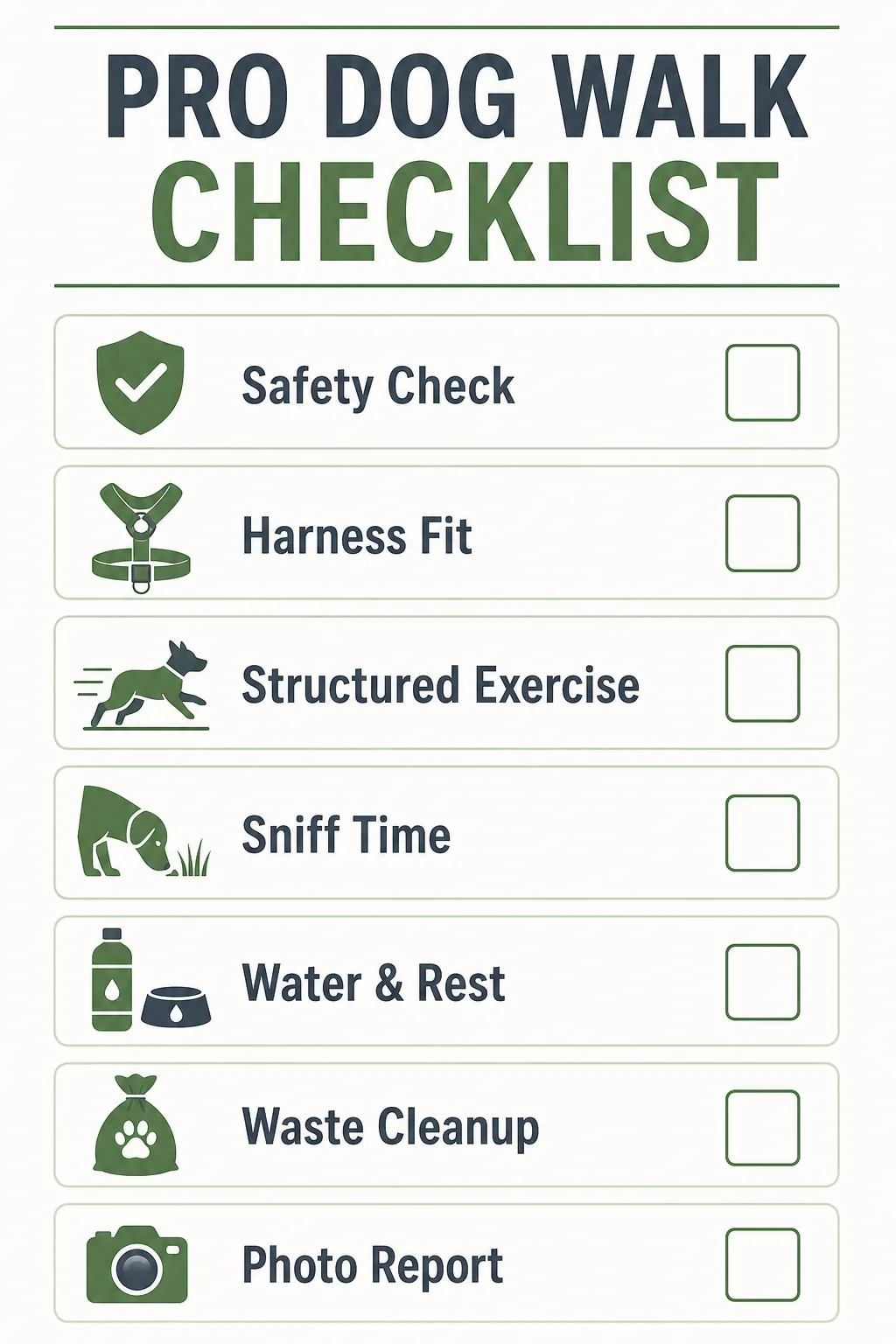
Here’s the checklist a professional runs through on every visit.
A Proper Greeting and Safety Check
Before heading out, a pro greets your dog calmly and does a quick safety check: collar or harness fits, leash is secure, ID tags attached. They read your dog’s mood too, an excited pup and an anxious one need different handling from the first minute.
A Secure, Well-Fitted Leash and Harness Setup
Professionals verify the gear instead of clipping on and going. A loose harness a dog can back out of is one of the most common, most preventable ways a walk goes wrong. A good walker checks the fit, uses the equipment you’ve approved, and carries a backup slip lead just in case.
Structured Exercise Matched to the Dog
Pace and duration should fit the individual dog, not a fixed route. A young, high-energy breed needs a brisker, longer outing; a senior or high-need dog needs a gentler pace with more rest. Owners who walk their dogs regularly are more likely to hit healthy activity levels, a pattern documented in a study in Nature Scientific Reports. A professional builds that consistency into every visit.
Mental Stimulation and “Sniff Time”
A walk is enrichment, not just cardio. Letting a dog sniff, explore, and decompress works the brain and lowers stress, a core reason the outing matters. A cross-sectional study on regular dog walking links routine walks to both physical activity and wellbeing. Good walkers give dogs room to Strut & Sniff Pet Services instead of rushing them along.
In a Texas summer, shaded rest breaks aren’t optional.
Fresh Water, Weather Awareness, and Rest
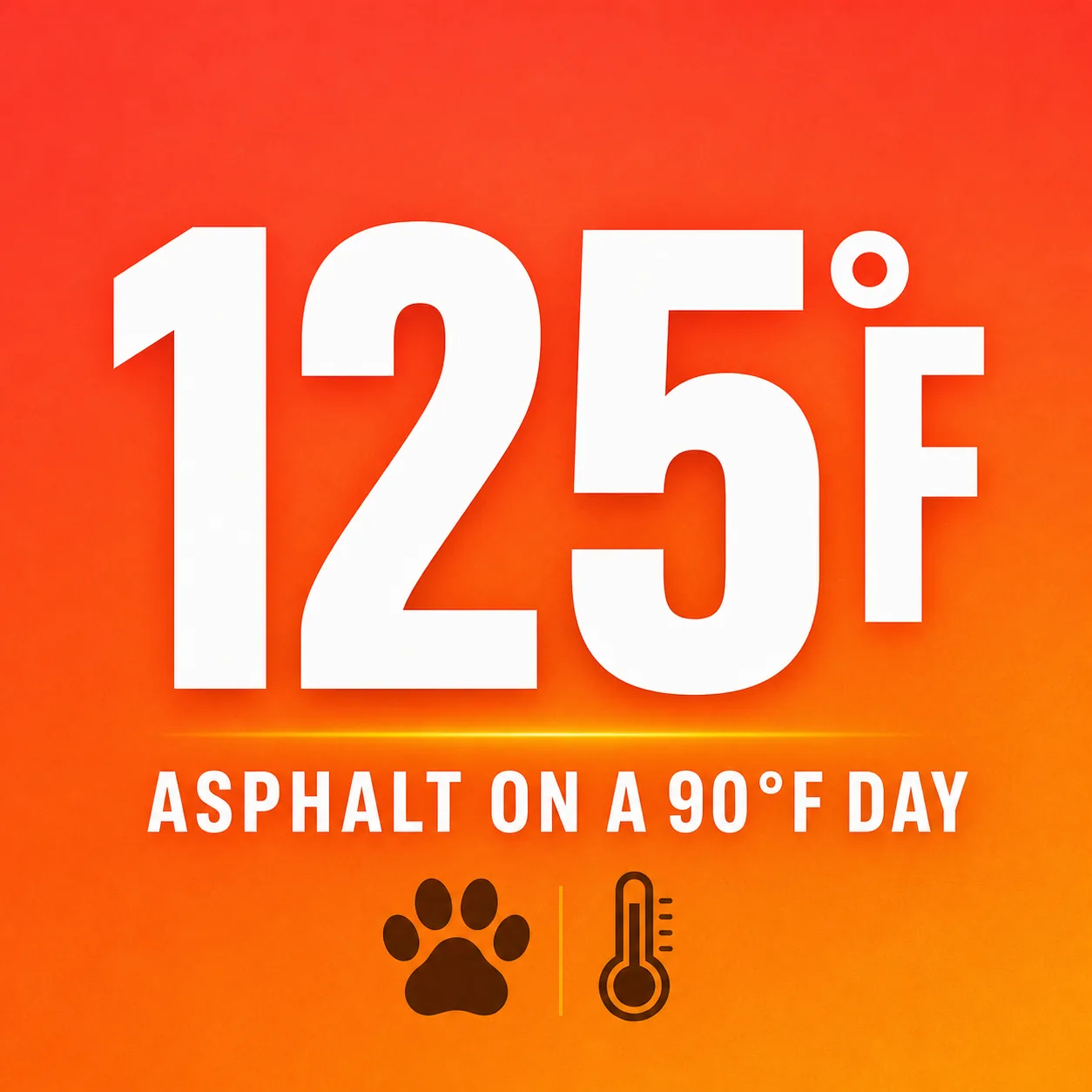
This is where Houston changes the math. Our heat and humidity turn an ordinary walk into a safety decision. A professional checks the pavement with the back of a hand before stepping onto it, hot asphalt burns paw pads fast, shifts walks to cooler parts of the day, carries water and a collapsible bowl, and watches for signs of overheating.
Waste Cleanup and Courtesy
Every professional carries bags and cleans up, every time. It keeps your yard and your street pleasant, and it reflects on you as an owner. For households that want the yard kept spotless between walks, a dedicated pet waste removal service handles it so you never have to think about it.
A Post-Walk Report, Photos, and Communication
This is the clearest marker of professional service. After the walk you should get a report: where the dog went, how they did, whether they ate, drank, or did their business, plus a photo or two. Real-time GPS tracking and detailed visit updates turn “I hope it went fine” into “I know exactly how it went.” That transparency is the heart of dependable pet care.
The Equipment a Professional Dog Walker Actually Carries
If you’re wondering what you need for a dog walking business, or what to look for in a walker’s kit, this is the working list:
- A sturdy, reliable leash (hands-free or traditional)
- A backup slip lead for security
- Poop bags (more than you think you’ll need)
- Treats for positive reinforcement
- Water and a collapsible bowl
- A basic pet first-aid kit
- A towel for muddy paws and rainy days
- Hand sanitizer and wipes
- Weather gear, sun protection in summer, rain gear year-round
The gear isn’t about looking the part. It’s about being ready for the ordinary surprises, a scraped pad, a sudden downpour, a dog that gets too hot, before they turn into problems.
How Professional Dog Walkers Keep Your Pet Safe and Insured
A dog walking job is more than companionship for hire; it’s real responsibility for another living being. Professionals invest in pet first-aid knowledge so they can respond calmly when something goes wrong, and they treat consistent, safe exercise as part of the job, not a bonus. The value of that steady activity is well documented, an analysis of the odds of getting adequate physical activity by dog walking found dog walkers were significantly more likely to meet recommended activity levels.
Insurance and bonding are another professionalism marker. In plain terms, insurance protects you and your pet if an accident happens on a walk, an injury, an escape, property damage. When you’re comparing walkers, it’s fair to ask whether they carry coverage. A professional answers without hesitation.
The Angles Most Guides Miss
Why Consistency and the Same Walker Matter
Dogs thrive on routine and familiar faces. A rotating cast of strangers is stressful, especially for anxious, senior, or high-need pets. Relationship-based care means the same trusted walker learns your dog’s quirks, notices when something’s off, and builds real trust over time. Continuity of care is the piece generic gear lists skip, and it’s often what separates good pet care from great.
What to Ask Before Hiring a Professional Dog Walker
A quick buyer’s checklist before you commit:
- Do they offer a free meet and greet before the first paid walk?
- How do they communicate, reports, photos, GPS tracking?
- Do they cover your specific neighborhood?
- What’s their backup plan if your regular walker is sick?
- Are they insured?
- Will the same person handle your dog each time?
Clear, confident answers usually mean you’ve found a professional.
Houston-Specific Considerations
Houston pet care has its own rules. Summer heat and humidity demand flexible timing and constant hydration. Apartment and inner-loop living, think Montrose, The Heights, Midtown, or the Museum District, means tight schedules, elevators, and busy sidewalks a walker has to navigate smoothly. A locally based professional who knows these neighborhoods plans routes and timing around them instead of forcing a generic template onto your dog’s day.
