
Here’s the honest short answer first: most healthy adult dogs need at least 2 to 3 visits per day when their owner is away, and puppies, seniors, and dogs with medical or anxiety needs usually need more. That’s the baseline the pros work from, and it settles most of the “is two drop-ins really enough?” debates you’ll find online.
But a flat number only gets you halfway. Your dog’s real answer depends on age, health, how long you’re gone, and whether they’re crated. Below is a simple framework to figure out your dog’s number, plus what a good visit should actually include, so you’re not just paying someone to glance at a food bowl.
The short answer: how many visits a day does a dog need?
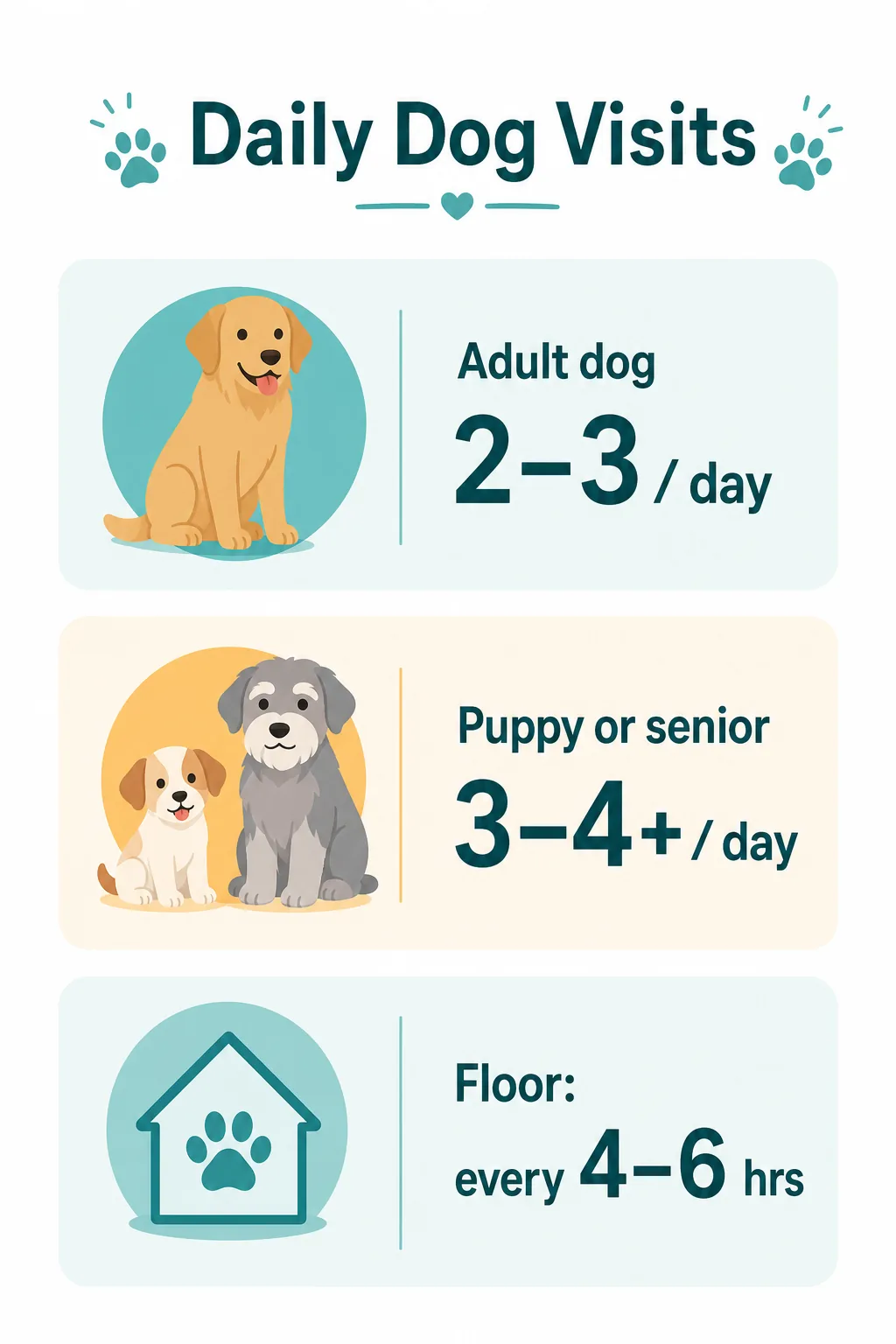
Want the quick-reference version? Tape this to the fridge:
- Healthy adult dog: 2–3 visits per day, minimum.
- Puppies, seniors, or dogs on medication: 3–4+ visits per day.
- Absolute floor for any dog left alone: a check-in roughly every 4–6 hours for a potty break and some human contact.
That 4–6 hour rule is the line under which even easygoing dogs start to struggle. A single visit a day leaves most dogs holding their bladder far too long and sitting alone for 20-plus hours, not fair to them, and it usually shows up as accidents, chewed furniture, or a very stressed dog by day two.
Dogs are deeply social animals, and regular company isn’t a luxury. A systematic review on pet ownership and quality of life underscores how central the human–animal bond is to a pet’s wellbeing, which is exactly why the frequency of interaction matters, not just food and water.
So when someone tells you two drop-ins a day is plenty, the accurate response is: it can be, for the right dog. For many dogs it’s the sensible minimum. For others it’s not nearly enough. Here’s how to tell which one you’ve got.
I have a potential new client that says their dog only needs 2 drop in visits per day while they are away. Typically my service is 3-4 visits per day depending …
Why the number matters: what your dog actually needs in a day
Instead of counting visits like clock punches, count needs. Every dog left at home has four, and your visit schedule exists to cover them.
Potty breaks and bladder limits
This is usually the deciding factor. A healthy adult dog shouldn’t be asked to hold it for 8 to 10-plus hours as a routine, a pattern the ACVIM consensus statement on lower urinary tract health advises against. Do that day after day and you risk accidents, discomfort, and urinary issues over time. Puppies are far more limited, a rough guide is one hour per month of age, so a three-month-old pup may need out every three hours. Match your visit count to how long your specific dog can comfortably wait, and you’re most of the way to the right answer.
Food, water, and medication timing
Most dogs eat twice a day, morning and evening. If yours is a twice-daily feeder, visits need to hit those windows rather than land whenever it’s convenient. Medication raises the stakes: a midday pill or a twice-a-day dose dictates the schedule outright. Fresh water on every visit matters too, especially in a warm climate.
Movement and mental stimulation
A good visit isn’t just a potty stop, it’s a chance to burn energy and engage the brain. A short walk, some fetch, or a few minutes of training keeps boredom-driven behavior (digging, barking, shredding) from creeping in. A dog who gets a real walk at midday is a calmer dog by evening.
Companionship and stress relief
Dogs left alone too long can spiral into anxiety, and that anxiety often looks like destruction or nonstop barking. Breaking up the day with human contact keeps it in check. People underestimate this need most, and it’s the one that separates “my dog survived the weekend” from “my dog was actually okay.”
How many visits by situation (the real answer is “it depends”)
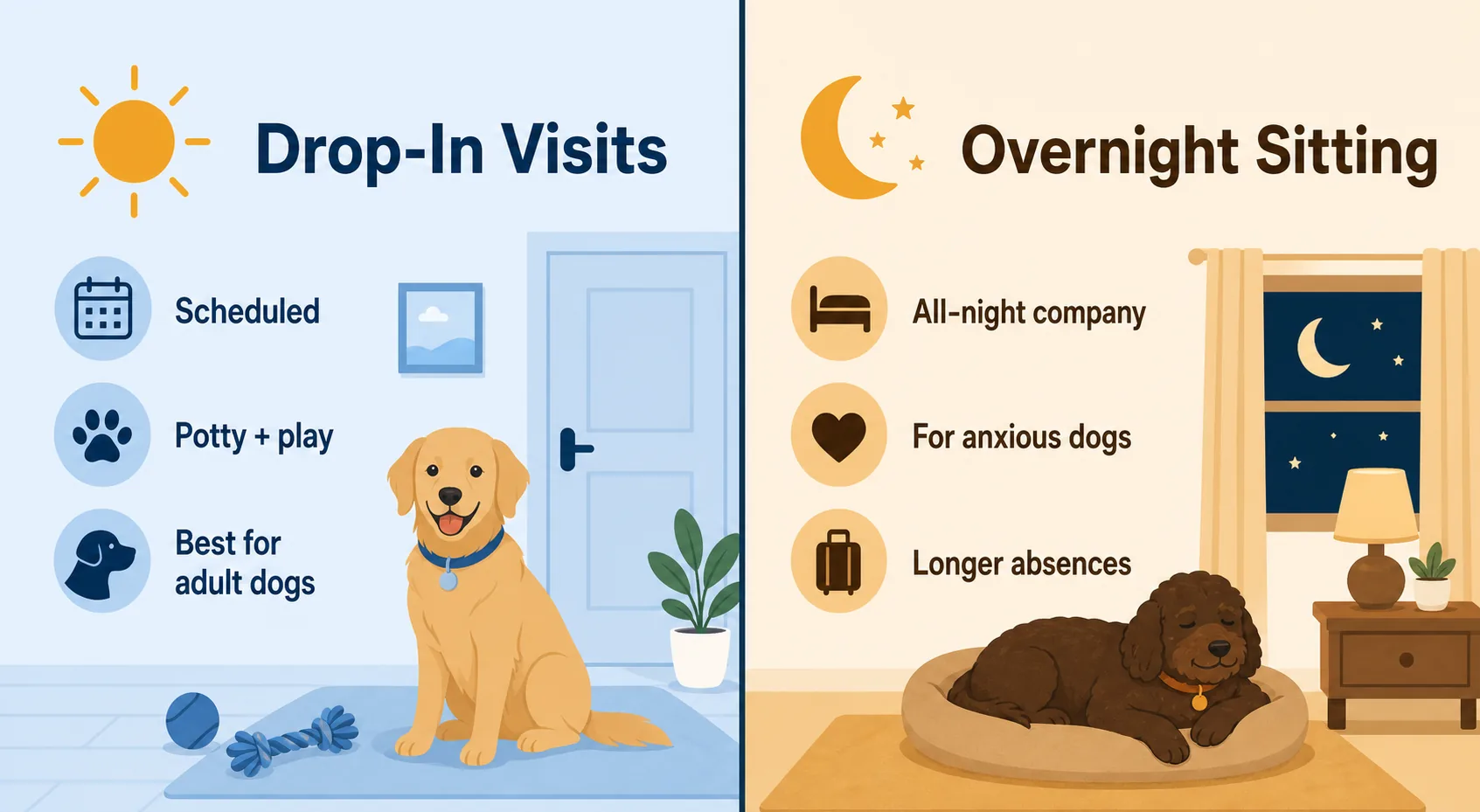
This is where the fridge chart gives way to your actual dog.
Adult, healthy dog
2–3 visits a day. For a full workday-plus, the sweet spot is morning, midday, and evening. If you handle morning and evening yourself and only need coverage while you’re at the office, one well-timed midday visit often does the trick.
Puppies
Every 3–4 hours, so 3–4+ visits. Puppies can’t hold their bladder long, and they’re in the thick of house-training, where consistency is everything. Skimping here doesn’t just risk accidents, it can set potty training back by weeks.
Senior dogs
More frequent, gentler visits. Older dogs often need extra potty breaks, medication on schedule, and a watchful eye on mobility. Some deal with incontinence and simply can’t wait as long as they used to. Shorter, more frequent check-ins usually beat a couple of long ones.
Crated dogs
Crating shortens safe alone-time. A crated dog can’t self-serve a potty break or stretch out, so the hours they can comfortably wait drop. If your dog is crated while you’re gone, err toward more frequent visits, not fewer.
Anxious or high-need dogs
Some dogs don’t do well with the come-and-go rhythm of drop-ins at all. For a dog with real separation anxiety, overnight coverage, a sitter present through the night, often beats spacing out three short visits. If your dog panics when left alone, the question isn’t just how many visits but whether drop-ins are the right format.
Multi-dog and cat households
One visit can cover multiple pets at once, which is efficient, but plan for each visit to run longer, since feeding, cleanup, and individual attention all multiply. Cats generally need less frequent check-ins than dogs, but they still need eyes on them, fresh water, and a clean litter box.
This is where the right service tier matters. For scheduled daytime coverage, drop-in pet visits are built exactly for this; for anxious dogs or longer absences, overnight pet sitting gives your dog steady, through-the-night company. A quick conversation about your dog’s routine is the fastest way to land on the right mix.
Matching visits to how long you’re gone
How long you’ll be away changes the math as much as your dog’s age does.
Gone for a workday (8–10 hours)
If you cover morning and evening yourself, you generally need at least one midday visit in the middle of the day. That single break resets the potty clock, delivers a walk, and gives your dog a mental reset before the long evening stretch.
Gone overnight or for a weekend
Now you’re covering the whole day, so 2–3 drop-ins per day becomes the working minimum, or you step up to overnight care. A weekend of thoughtfully spaced visits keeps feeding, potty, and play on track without your dog ever being alone for a full stretch.
Extended travel
For longer trips, consistency matters more than anything. A dog does far better with a predictable daily rhythm than with sporadic, rushed stops. This is where overnight sitting often pulls ahead of sparse drop-ins: your dog keeps a near-normal routine, someone’s there at night, and the house stays lived-in. Plenty of owners simply can’t bring their dogs along, a Clemson University study on the likelihood of traveling with dogs examines how often dogs get left behind when their people travel, which is exactly why dependable in-home care exists. Pairing steady visits with regular private dog walking keeps an extended absence from feeling like a punishment.
What actually happens during a good drop-in visit
Most articles skip this, and it’s the part that decides whether you can relax while you’re gone. A quality visit is more than opening the back door. It should cover:
- A potty break and a chance to stretch and move.
- Fresh food and water, portioned to your instructions.
- Any medication, given on schedule.
- A real walk or play session, not a rushed in-and-out.
- Litter box or cleanup as needed.
- A quick wellness look, eating normally? moving comfortably? acting like themselves?
- A visit report and photos sent to you, so you actually know how it went.
That last point is where a relationship-based, communication-first service earns its keep. Real-time GPS tracking on walks and detailed visit notes mean you’re never left in the dark, and you’re dealing with a consistent person who knows your dog, not a rotating cast from an app. That’s the heart of what Strut & Sniff’s pet care services are built around. If your yard needs it, pet waste removal can be folded in so you don’t come home to a mess.
A photo of your dog mid-tail-wag with a short note, instead of wondering all day, is the difference between guessing and knowing.
Signs your dog needs more visits than you scheduled
Dogs tell you when the schedule is too thin. Watch for:
- Accidents in the house, even from a fully trained dog, a strong sign they’re being left too long.
- Destroyed items, shredded pillows, chewed door frames, dug-up carpet, classic boredom or anxiety tells.
- Excessive barking or howling, sometimes flagged first by a neighbor.
- Not eating during visits, a stressed dog often won’t touch food.
- Low energy, hiding, or withdrawal when you get home.
A change in behavior can also point to something medical rather than emotional, so if the signs persist, it’s worth a wellness check. Owners who stay connected to routine veterinary care tend to catch issues earlier, research on the use of veterinary services by US dog and cat owners looks at how regular professional care factors into a pet’s long-term health. When in doubt, add a visit and loop in your vet.
How to build the right visit schedule for your dog
A simple, five-step way to land on your dog’s number:
- Count the safe hours between potty breaks for your dog’s age and health. That sets your maximum gap.
- Layer in feeding and medication times so visits land when they’re actually needed.
- Add stimulation needs, does your dog need a real walk midday, or just a quick out?
- Factor in age and health, puppies, seniors, crated, or anxious dogs push the number up.
- Book a Meet & Greet so a sitter can see your dog’s space and routine and tailor the plan.
One more thing worth saying plainly: the right schedule costs a little more than the bare minimum, and it’s worth it. If you value trust, clear communication, and knowing your dog is genuinely okay, a well-built plan buys peace of mind that a rock-bottom price never will.
A note for Houston dog owners
Houston heat changes the calculation. In summer, a dog left without a midday check can go a long, hot stretch without fresh water or a cool-down, and pavement gets dangerously hot for paws by late morning. That makes a midday visit, fresh water, a shaded potty break, and short, sensible outings rather than long midday walks, more important here than in milder climates.
Strut & Sniff is locally based and serves neighborhoods across central, inner-loop, west, and southwest Houston. Check the Service Areas page for the full, current list to confirm we cover yours.
Frequently asked questions
Is one visit a day enough for a dog?
Is two drop-in visits a day enough?
How long can a dog be left alone between visits?
Do dogs need overnight visits, or are drop-ins okay?
How many times a day should a dog go out to potty?
Can one visit cover two dogs?
The baseline is 2–3 visits a day for a healthy adult dog, but your dog’s real number comes down to age, health, and how long you’ll be gone. The best way to get it exactly right is to have someone see your dog and their routine firsthand.
Want to compare options first? Take a look at the Pricing and Pet Visits pages, then leave home knowing your dog is safe, happy, and genuinely looked after.
